
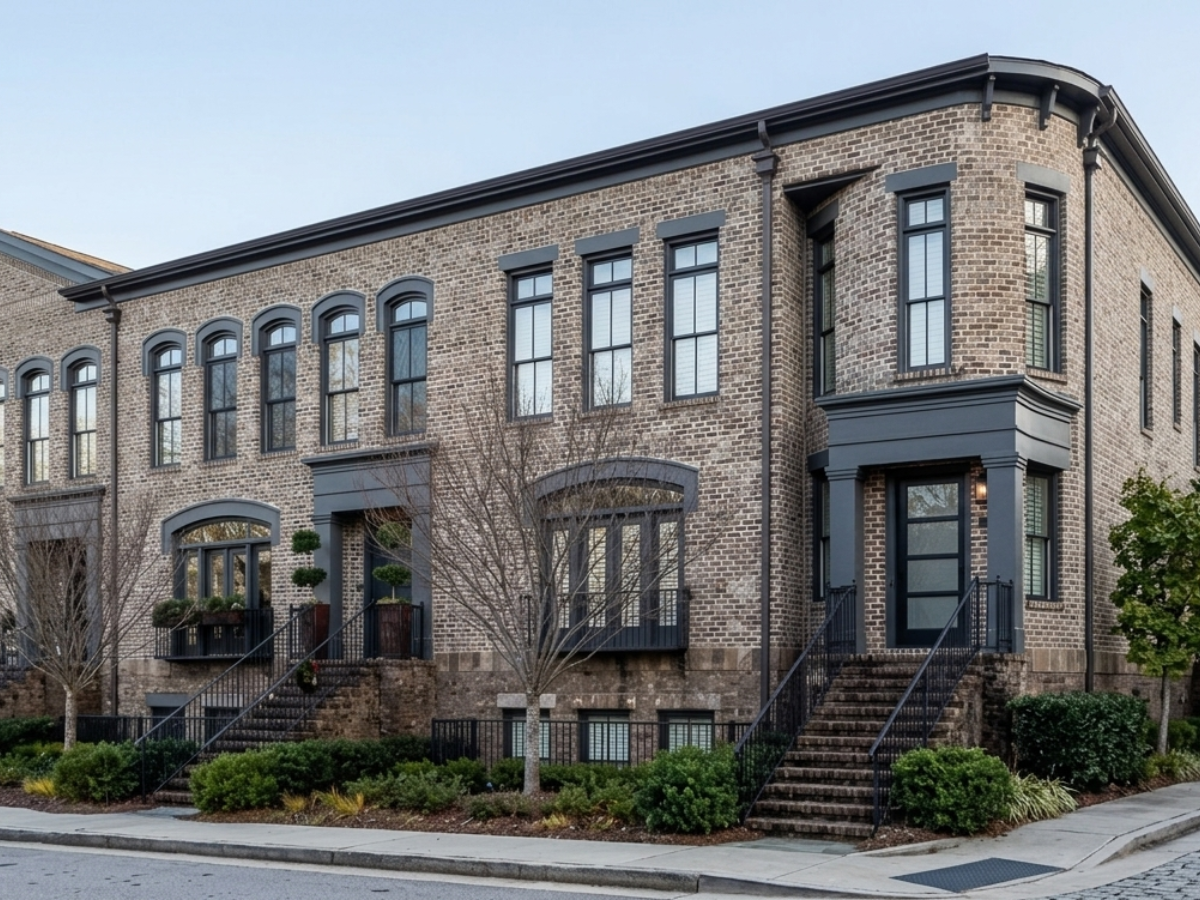
For townhome communities across Metro Atlanta, exterior repainting isn’t just about appearance—it’s a long‑term maintenance decision that directly impacts property values, HOA budgets, and resident satisfaction.
One of the most common questions HOA boards and facility managers ask is:
“How often should our townhome community repaint the exterior?”
The answer depends on materials, exposure, and—most importantly—Georgia’s climate, which is far more demanding than many boards expect. Communities in Buckhead, Brookhaven, and Sandy Springs, with their mix of sun exposure, tree cover, and humidity, often see exterior paint fail sooner than anticipated.
This guide breaks down realistic repaint timelines and how townhome communities can plan proactively—rather than reacting to visible deterioration.
Why Georgia’s Climate Shortens Exterior Paint Lifespans
Metro Atlanta’s weather creates ideal conditions for exterior paint breakdown. Townhome exteriors are constantly exposed to:
- High humidity that encourages mildew and moisture retention
- Strong UV exposure that causes fading and chalking
- Seasonal storms that stress joints, trim, and caulking
- Pollen buildup that makes faded paint look dirty faster
Because townhomes often have multiple elevations, shared walls, and mixed materials, paint rarely fails evenly across the community. Some buildings show wear years before others.
This is why exterior repaint schedules in Georgia tend to be shorter than national averages.
Typical Exterior Repaint Timelines for Townhome Communities
While no two communities are identical, these are realistic repaint ranges for Metro Atlanta townhomes when proper prep and coatings are used:
- Fiber cement siding: every 8–12 years
- Painted brick: every 10–15 years
- Wood trim and accents: every 5–7 years
- Stucco elements: every 7–10 years
Communities with heavy shade, irrigation overspray, or west‑facing sun exposure often fall on the shorter end of these ranges.
In neighborhoods like Sandy Springs and Brookhaven, mature tree cover can increase moisture retention—accelerating paint failure if not addressed early.
Signs Your Community Should Repaint (Even If It Feels “Too Soon”)
Boards often wait until repainting is unavoidable. However, proactive communities watch for early warning signs, including:
- Fading or uneven color across buildings
- Peeling or cracking paint on trim and fascia
- Chalky residue that returns quickly after cleaning
- Mildew staining on shaded elevations
- Patchwork touch‑ups that no longer match
Once these issues become widespread, repainting is usually more cost‑effective than continued repairs.
Why Townhome Communities Can’t Rely on Touch‑Ups Forever
Touch‑ups can work temporarily—but over time they create visual inconsistency and higher labor costs.
For townhome communities, excessive touch‑ups often lead to:
- Mismatched color tones
- Uneven aging across buildings
- Increased resident complaints
- Higher long‑term maintenance spending
A planned community‑wide exterior repaint resets the clock and restores uniformity—something patching can’t achieve.
How Exposure Impacts Repaint Frequency
Not all buildings age at the same rate. Facility managers should evaluate:
- South‑ and west‑facing elevations (UV damage)
- Shaded or north‑facing sides (mildew and moisture)
- High‑traffic areas near walkways and entrances
- Trim and architectural details that fail faster than siding
Many townhome communities in Buckhead and Brookhaven use phased repainting to address high‑exposure areas first while planning future phases.
The Role of Paint Quality and Prep in Repaint Cycles
Repaint frequency isn’t just about time—it’s about how the last project was executed.
Short repaint cycles are often caused by:
- Inadequate surface preparation
- Skipping primer where needed
- Using residential‑grade coatings on community exteriors
- Poor caulking or moisture management
A qualified townhome exterior painting contractor in Atlanta will design a paint system around substrates, exposure, and durability—not just color selection.
Planning Repaints Around HOA Budgets and Reserves
Smart HOA boards treat exterior repainting as a predictable lifecycle expense, not a surprise.
Best practices include:
- Including repaint cycles in reserve studies
- Planning repainting before widespread failure occurs
- Phasing projects to spread costs over multiple years
- Aligning repainting with other exterior maintenance
This approach reduces the risk of special assessments and helps boards maintain financial stability.
Why the Right Contractor Extends Time Between Repaints
A contractor experienced with Metro Atlanta townhome communities helps extend repaint intervals by:
- Selecting coatings designed for Georgia’s climate
- Addressing moisture and prep issues upfront
- Creating consistent standards across buildings
- Documenting colors and systems for future maintenance
This turns repainting into a long‑term investment, not a recurring headache.
As Atlanta’s Townhome Doctor, we help communities evaluate exterior conditions early—before fading, mildew, or peeling paint turns into costly repairs. Our approach focuses on extending repaint cycles, protecting HOA budgets, and keeping communities looking consistent year after year.
Learn More: A Complete Guide for Townhome Communities in Atlanta
If your community is evaluating repaint timing or planning future phases, our pillar resource provides a deeper framework: Ultimate Guide to Painting Townhome Communities in Atlanta. It covers repaint cycles, budgeting, phasing, color consistency, and how to work effectively with townhome painting contractors.
Final Takeaway for HOA Boards and Facility Managers
In Georgia’s climate, waiting too long to repaint a townhome community often costs more than planning ahead.
By understanding realistic repaint timelines and working with the right Metro Atlanta townhome exterior painting contractor, communities in Buckhead, Brookhaven, and Sandy Springs can protect curb appeal, control costs, and avoid unnecessary disruption. Contact us today!