
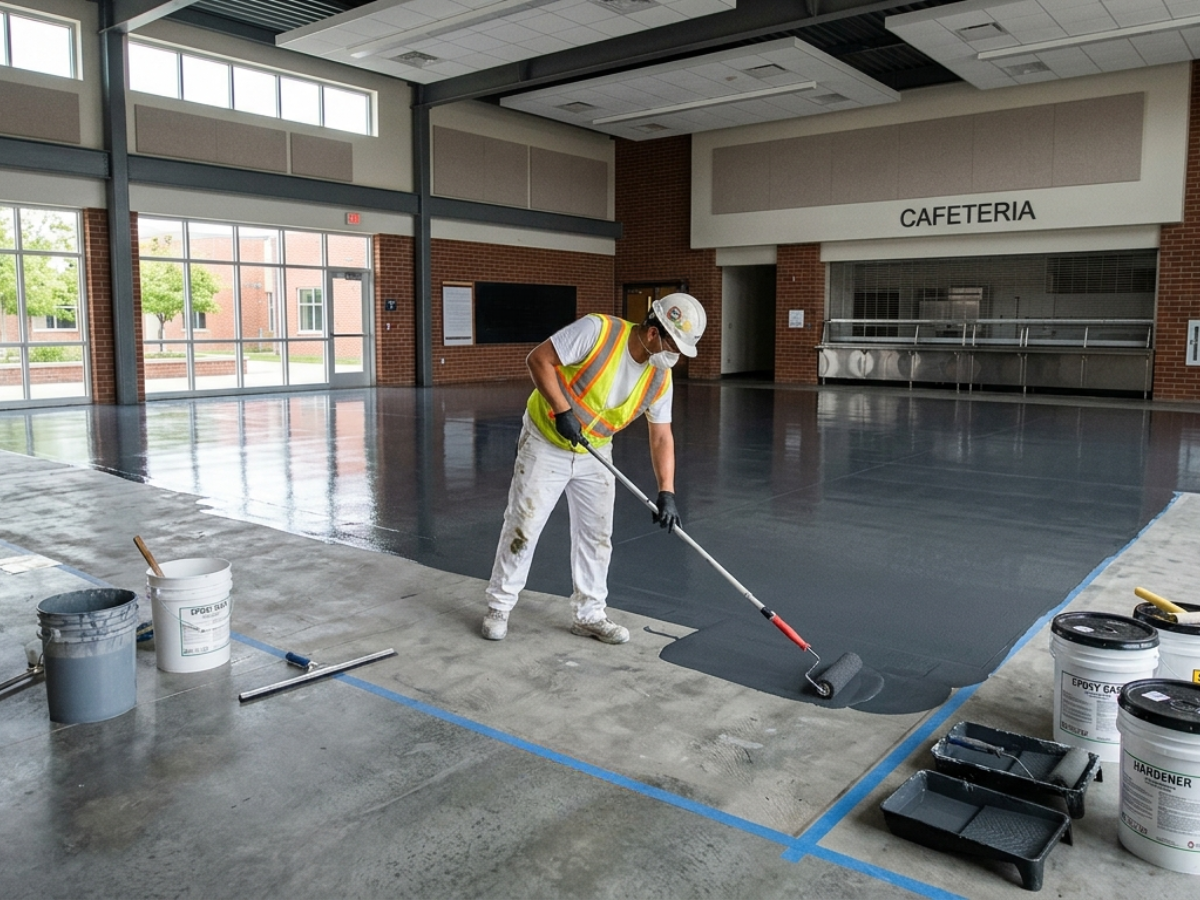
In many K‑12 schools, cafeteria floors experience more wear in a single lunch period than some office spaces see in an entire week. Rolling food carts, frequent spills, and hundreds of students moving through in short windows place constant stress on these surfaces. Science labs face a different—but equally demanding—set of challenges, from chemical exposure and equipment movement to strict cleaning protocols between class periods.
Across Metro Atlanta, school administrators and facility managers are increasingly turning to epoxy flooring for schools as a long‑term solution for these high‑use environments. When properly designed and installed, epoxy flooring improves safety, supports sanitation standards, and reduces ongoing maintenance demands—making it especially well‑suited for labs and cafeterias where downtime is limited and expectations are high.
As a proud Georgia Charter Schools Association (GCSA)member and Georgia Independent School Association (GISA) corporate sponsor, we work closely with charter and independent schools throughout Metro Atlanta to create durable, compliant, and low‑maintenance learning environments.
Below, we explore how epoxy flooring for schools improves safety and maintenance efficiency in labs and cafeterias—and why it’s a smart investment for K‑12 campuses across the Atlanta area.
Why Epoxy Flooring for Schools Matters in Labs and Cafeterias
Common Flooring Challenges in Metro Atlanta K‑12 Schools
School labs and cafeterias place unique demands on flooring systems. Unlike standard classrooms, these spaces are routinely exposed to:
- Frequent spills (food, liquids, and lab chemicals)
- Heavy foot traffic and rolling equipment
- Strict sanitation and health requirements
- Slip‑and‑fall risks in wet areas
- Long operating hours with minimal downtime
In Metro Atlanta’s busy school environments, these conditions are often intensified by year‑round building use, summer programs, and after‑hours activities.
Why Traditional School Flooring Falls Short
Traditional flooring materials—such as VCT, ceramic tile with grout lines, or sealed concrete—often struggle under these conditions. Over time, moisture intrusion, cracking, staining, and worn grout lines can create safety hazards and increase maintenance costs.
Facility teams frequently notice early warning signs like darkened grout, lingering odors, and small cracks that quickly turn into recurring repair requests. Epoxy flooring for schools directly addresses these challenges.
How Epoxy Flooring Improves Safety in School Environments
Slip‑Resistant Epoxy Flooring for School Cafeterias
Safety is always a top priority in K‑12 facilities. Epoxy flooring systems can be customized with slip‑resistant additives that significantly reduce the risk of slips and falls—especially critical in cafeterias where spills are unavoidable.
In school cafeterias across Metro Atlanta, slip resistance is particularly important near serving lines, drink stations, and dish return areas. Textured epoxy finishes maintain traction even when wet, helping protect students, teachers, custodial teams, and food service staff.
Seamless, Crack‑Free Floors for Science Labs
Unlike tile or segmented flooring, epoxy creates a seamless surface. Without grout lines or seams, there are fewer tripping hazards and no gaps where moisture, bacteria, or chemicals can accumulate.
In science labs, even small cracks can become compliance and safety concerns once chemicals penetrate the surface. Seamless epoxy flooring supports lab safety protocols by making thorough, reliable cleaning easier.
Chemical and Impact Resistance for Daily Use
School labs routinely expose floors to mild acids, cleaning agents, and equipment movement. High‑quality epoxy flooring resists chemical damage and impact, maintaining its integrity and appearance over time. This durability helps prevent unexpected floor failures during the school year.
Lower Maintenance and Better Hygiene with Epoxy Flooring
Faster, More Efficient Cleaning
Custodial efficiency matters—especially in large Metro Atlanta school facilities. Epoxy floors are non‑porous, meaning spills stay on the surface rather than soaking in. Food residue, liquids, and lab materials can be cleaned quickly using standard cleaning methods.
For custodial teams working within tight overnight cleaning windows, fewer seams and no grout lines can significantly improve cleaning speed and consistency.
Supporting Health and Sanitation Standards
Because epoxy flooring doesn’t harbor bacteria, mold, or odors, it supports higher sanitation standards—critical for both food service areas and science classrooms. For cafeterias in particular, this makes it easier to meet local health department expectations with confidence.
Reducing Long‑Term Flooring Costs
While epoxy flooring for schools is a premium solution upfront, many K‑12 administrators find it reduces total lifetime costs. With fewer repairs, resealing cycles, and replacements compared to traditional flooring, epoxy often proves more cost‑effective over time—especially for schools managing tight maintenance budgets.
Built for High‑Traffic School Spaces Across Metro Atlanta
Labs and cafeterias are among the busiest areas on campus, often used before, during, and after normal school hours. Epoxy flooring systems are designed to withstand:
- Constant foot traffic
- Rolling cafeteria equipment
- Furniture movement
- Regular deep cleaning
Repeated chair movement and rolling carts often cause more long‑term damage than foot traffic alone—something many schools don’t realize until floors begin to fail prematurely.
Epoxy flooring can also be customized with school colors, safety striping, or visual wayfinding, helping large campuses improve organization and traffic flow.
Epoxy Flooring Installation with Minimal School Disruption
Modern epoxy flooring systems can often be installed efficiently during school breaks or phased construction schedules. With proper planning, schools can upgrade aging floors with minimal disruption to students and staff.
For Metro Atlanta schools, epoxy flooring is well‑suited for:
- Summer renovation projects
- Phased cafeteria upgrades
- Science lab modernization
- Campus‑wide safety improvement plans
Careful coordination around testing schedules, summer programs, and food service operations makes epoxy a practical and flexible option.
Serving K‑12 Schools Throughout Metro Atlanta
Choosing the right flooring system is only part of the equation. Working with a contractor who understands K‑12 environments is just as important. As a company committed to serving charter and independent schools throughout Metro Atlanta, we align every epoxy flooring project with safety requirements, durability needs, and long‑term facility goals.
For schools planning broader upgrades, epoxy flooring often pairs naturally with painting, coatings, and surface restoration. Our Ultimate Guide to Painting K‑12 Charter & Independent Schools in Atlantaexplores how to plan efficient, coordinated campus improvements.
Final Thoughts: Is Epoxy Flooring Right for Your School?
Epoxy flooring for schools offers a powerful combination of safety, durability, hygiene, and maintenance efficiency—making it an ideal solution for labs and cafeterias.
For K‑12 administrators, flooring decisions aren’t cosmetic. They impact safety, compliance, and the responsible use of limited facility budgets. For schools across Metro Atlanta focused on protecting students, streamlining maintenance, and maximizing long‑term value, epoxy flooring is an upgrade well worth considering.
When designed and installed correctly, epoxy flooring supports healthier learning environments and long‑term operational success.
FAQs: Epoxy Flooring for Schools
Is epoxy flooring safe for school cafeterias and labs?
Yes. Epoxy flooring can include slip‑resistant textures and seamless surfaces that reduce hazards and improve safety.
Yes. Epoxy flooring can include slip‑resistant textures and seamless surfaces that reduce hazards and improve safety.
How long does epoxy flooring last in schools?
With proper installation and maintenance, epoxy flooring can last 10–20 years in high‑traffic school environments.
With proper installation and maintenance, epoxy flooring can last 10–20 years in high‑traffic school environments.
Can epoxy flooring handle chemical spills in science labs?
High‑quality epoxy systems resist common lab chemicals, cleaners, and impacts, making them ideal for school labs.
High‑quality epoxy systems resist common lab chemicals, cleaners, and impacts, making them ideal for school labs.
Is epoxy flooring easy for custodial teams to maintain?
Yes. Epoxy floors are non‑porous and easy to clean, helping custodial teams work more efficiently.
Yes. Epoxy floors are non‑porous and easy to clean, helping custodial teams work more efficiently.
When is the best time to install epoxy flooring in schools?
Most Metro Atlanta schools schedule installations during summer break or phased renovations to minimize disruption.
Most Metro Atlanta schools schedule installations during summer break or phased renovations to minimize disruption.
Ready to start your Metro Atlanta school painting project? Contact us!