
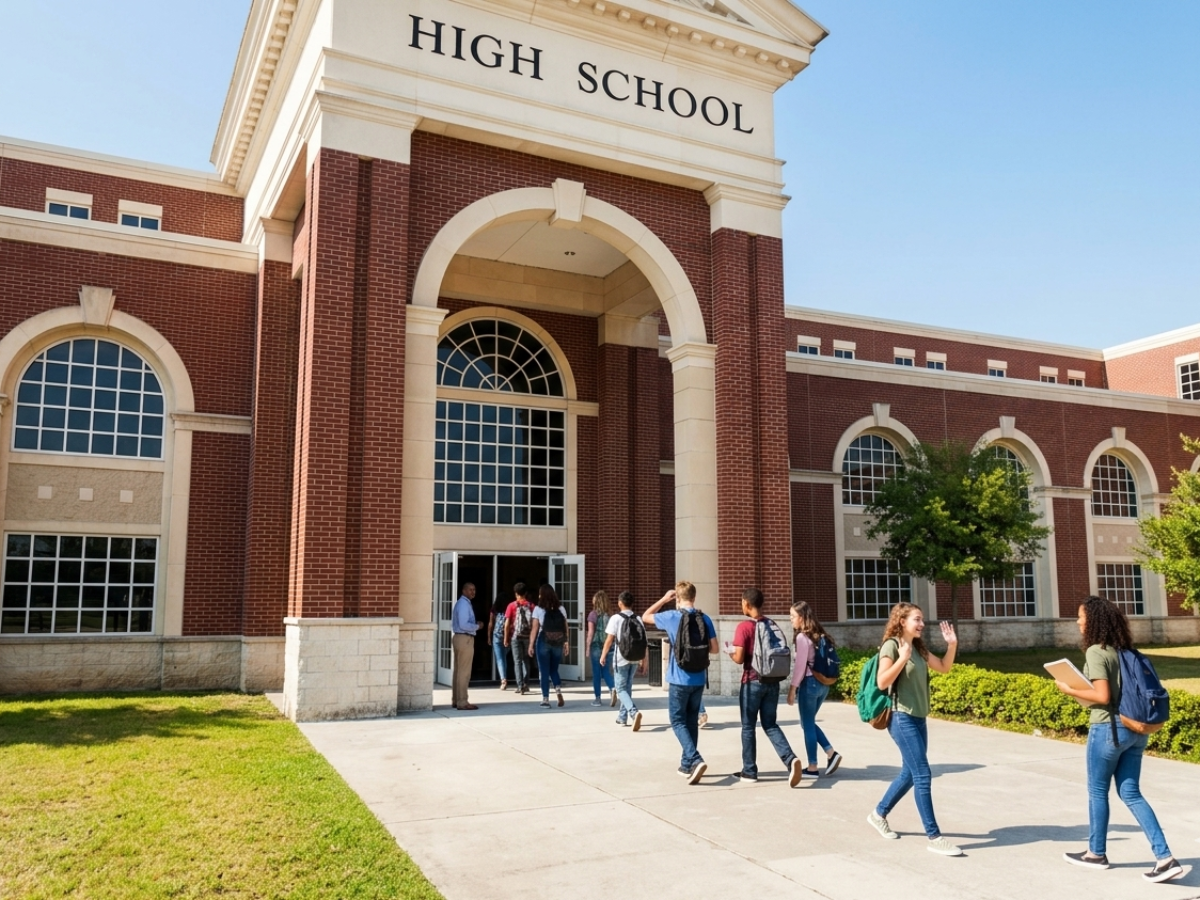
Independent and Charter School campuses in Metro Atlanta experience constant exterior wear. From daily carpool lines and bus loops to recess areas, athletic facilities, and main entrances, school exteriors are among the highest‑traffic environments a facility team manages.
For school leaders and facility managers, exterior paint choices must do more than look good. They must support student safety, clear navigation, and long‑term durability—all while holding up to Atlanta’s climate.
This guide explains how the right exterior paint choices help schools improve safety and wayfinding, reduce maintenance issues, and extend repaint cycles in high‑traffic areas.
Why Exterior Paint Choices Matter More in School Environments
Unlike most commercial buildings, K–12 campuses serve:
- Young students with developing spatial awareness
- Families and visitors unfamiliar with campus layouts
- Staff managing daily movement at peak times
Exterior paint plays a functional role in how people move, pause, and orient themselves across campus. When paint fades, peels, or lacks contrast, it can create confusion—or even safety risks.
That’s why exterior painting decisions for schools should always be made through a safety‑first, durability‑focused lens.
Supporting Safety With High‑Visibility Exterior Paint
High‑traffic school exteriors include:
- Main entrances and vestibules
- Carpool and drop‑off zones
- Walkways, ramps, and stairs
- Courtyards and outdoor learning areas
In these spaces, exterior paint should help clearly define:
- Changes in elevation
- Entry points and exits
- Pedestrian paths
- Restricted or staff‑only areas
Using subtle contrast—not harsh colors—helps improve visibility without making the campus feel institutional. Over time, faded paint reduces this clarity, which is why durable coatings and regular repaint cycles matter.
Wayfinding: Helping Families and Visitors Navigate the Campus
Clear wayfinding is especially important for Independent and Charter Schools that host:
- Tours and open houses
- New families during enrollment season
- Substitute staff and volunteers
- Event guests unfamiliar with the campus
Exterior paint supports wayfinding by:
- Differentiating main entrances from secondary doors
- Creating visual cues at key transition points
- Reinforcing consistent color standards across buildings
For multi‑building campuses, consistent exterior paint schemes reduce confusion and help visitors intuitively understand where to go—before signage is even read.
Durability Is Critical for High‑Traffic School Exteriors
High‑traffic areas fail first when the wrong paint systems are used. In Metro Atlanta, exterior paint must withstand:
- Heavy UV exposure
- Humidity and mildew on shaded elevations
- Frequent cleaning and pressure washing
- Physical contact near doors, rails, and walkways
Facility managers should prioritize commercial‑grade exterior paint systems designed for institutional use—not residential products.
Durable systems reduce:
- Peeling and premature fading
- Frequent touch‑ups
- Inconsistent appearance across campus
- Long‑term maintenance costs
Key Exterior Areas Schools Should Prioritize First
When budgets or timelines require phasing, high‑traffic zones should be addressed first:
- Main building entrances
- Carpool and bus loop façades
- Doors, trim, and fascia near student flow
- Walkways, ramps, and stair railings
- Courtyards used for daily activities
Improving these areas delivers immediate benefits in safety, appearance, and usability, even before a full‑campus repaint is complete.
Choosing Colors That Balance Safety and Professionalism
Effective exterior palettes for schools typically:
- Use neutral, light body colors to reflect heat
- Introduce contrast at doors and key features
- Maintain consistency across buildings and additions
- Align with school branding without overwhelming it
The goal is clarity and cohesion—not trends. This approach helps campuses feel calm, organized, and intentional.
Scheduling Exterior Painting Without Disrupting School Operations
Because high‑traffic areas are essential to daily operations, exterior repainting must be carefully scheduled.
Most Metro Atlanta Independent and Charter Schools plan exterior projects:
- During summer break
- In clearly defined phases
- With safety zones and access routes maintained
An experienced school painting contractor in Metro Atlanta will help schools sequence work to protect students, staff, and visitors throughout the project.
Long‑Term Planning Reduces Risk and Cost
Schools that treat exterior repainting as a predictable lifecycle expense—rather than a reaction to visible failure—see better outcomes.
Proactive planning:
- Extends repaint cycles
- Improves safety consistency
- Reduces emergency repairs
- Protects campus appearance over time
This is especially important for high‑traffic exteriors, where wear appears faster.
Learn More: A Complete Guide for K‑12 Schools in Metro Atlanta
If your school is evaluating exterior repainting strategies with safety and durability in mind, our pillar resource provides a deeper framework: Ultimate Guide to Painting K‑12 Charter & Independent Schools in Atlanta. It covers planning, safety, scheduling, coating selection, and long‑term maintenance strategies tailored to K–12 campuses.
As proud members of the Georgia Charter Schools Association (GCSA) and corporate sponsors of the Georgia Independent School Association (GISA), we work closely with Independent and Charter Schools across Metro Atlanta and understand the operational, safety, and scheduling realities of school campuses.
Final Takeaway for Facility Managers and School Leaders
Exterior paint choices directly affect how safe, navigable, and durable a school campus feels.
For Independent and Charter Schools in Metro Atlanta, prioritizing safety, wayfinding, and durability in exterior repaint projects protects students, supports families, and reduces long‑term maintenance strain—making exterior painting a strategic facilities decision, not just a cosmetic one. Ready to start with your strategy for maintenance painting? We’ve got you covered.