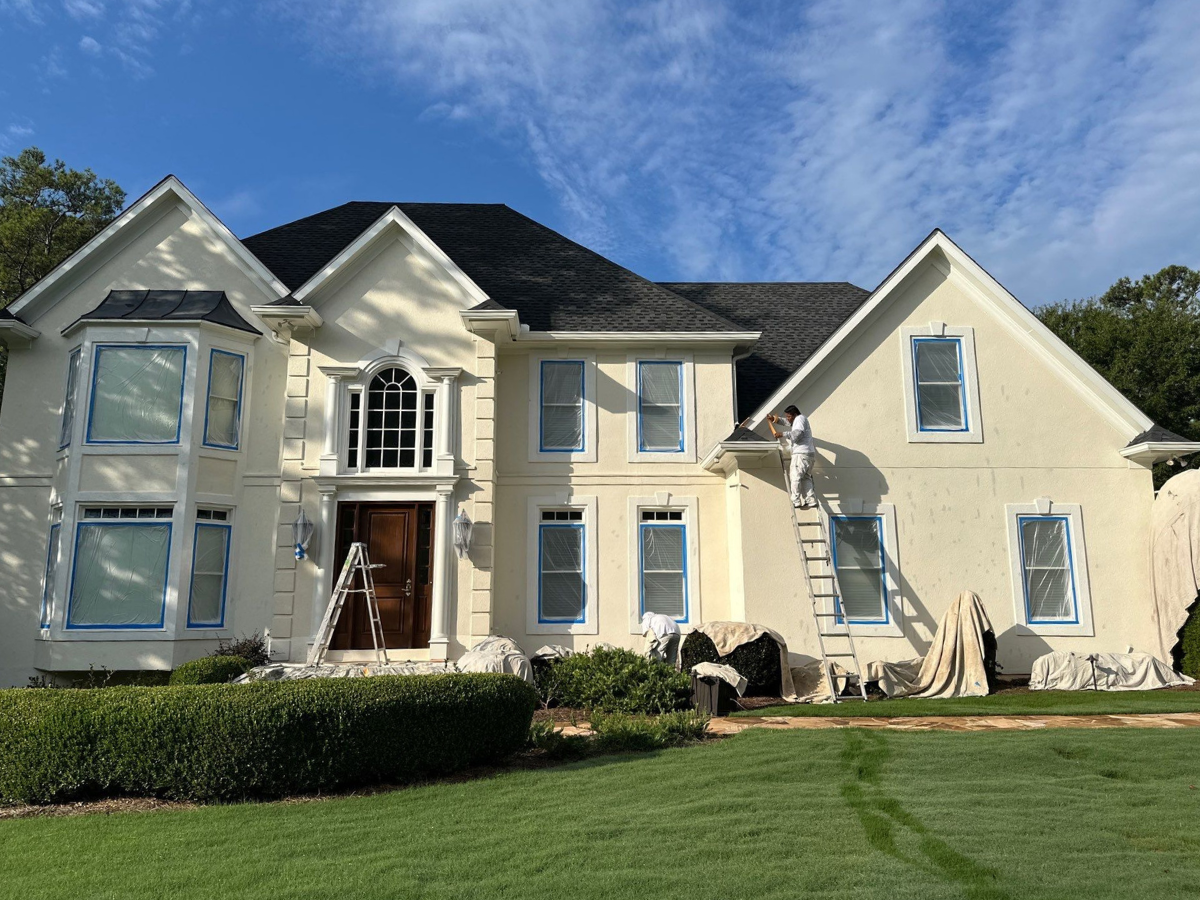
Most homeowners ask me how to pick exterior paint colors while standing in the driveway at two in the afternoon. That is close to the only hour their house looks that way. After 25 years and more than 3,000 projects across North Atlanta, our team can tell you that how lighting affects paint color after dark is the step almost everyone skips. Porch fixtures, path lights, a streetlamp, and a neighbor’s floodlight take over your siding for a large slice of every evening. Those sources do not put out the same light your sample chip was printed under. That gap is why a homeowner can approve a color at noon and stare at it in a different mood by nine. It is also why we walk color at night on exterior house painting projects before anyone signs anything.
How Lighting Affects Paint Color Once the Sun Goes Down
Sunlight contains every wavelength your eye can read. Artificial light does not. A bulb produces a narrower slice of the spectrum, and your paint can only bounce back what lands on it. When a wavelength is missing from the bulb, the pigment that depends on it goes quiet.
The U.S. Department of Energy measures this with the color rendering index, and its guidance on LED lighting puts a minimum of 80 CRI as the working floor, with 90 and above marking excellent color fidelity. A cheap bulb with a low score can flatten a color you spent three weeks choosing. Two bulbs rated at the same warmth can still render your siding differently, which is why the number on the box matters more than the price.
What Your Bulbs Are Doing to Your Siding
Color temperature is printed in Kelvin on the Lighting Facts label of almost every bulb sold. Lower numbers read warm and slightly orange. Higher numbers read cool and blue. Here is what that means once the light hits your house.
| Bulb Color Temperature | How the Light Reads | What it Does to Exterior Color |
|---|---|---|
| 2200K to 2700K | Amber, candle-like | Warms beige and tan, mutes blue and green undertones |
| 3000K | Warm white | Keeps most colors close to daylight, slight yellow shift |
| 4000K | Neutral to cool white | Grays out warm colors, sharpens blues and greens |
| 5000K and above | Blue white | Column 3 Value 4 |
DarkSky International, which certifies outdoor fixtures, recommends 2700K or lower for the most night friendly exterior lighting, and caps its approved products at 3000K. That range also happens to be the friendliest to the warm whites, creams, and greiges that fill Brookhaven streets. If your fixtures run cool and your color runs warm, one of the two has to give.
The Light Sources Actually Hitting Your House
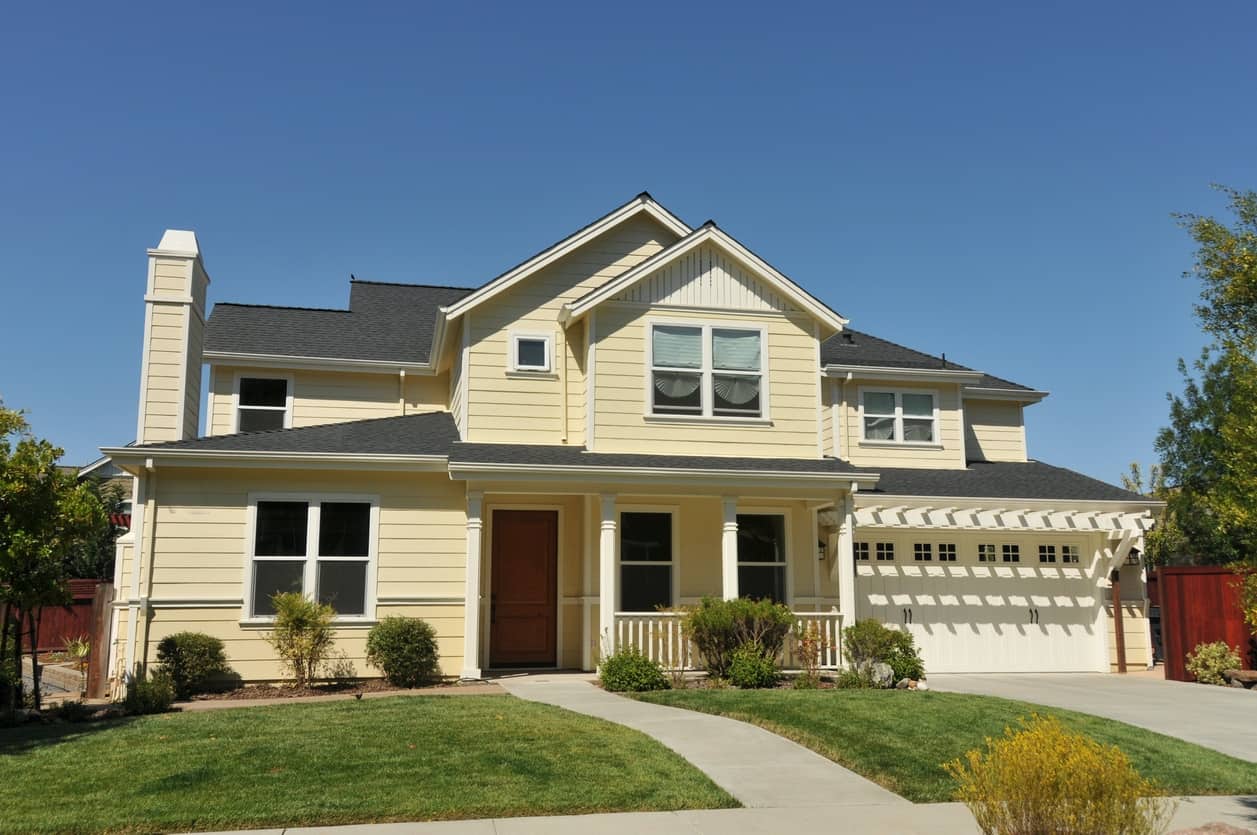
A house on a Brookhaven cul de sac rarely sits under one light source. It sits under four or five at once, and they usually do not match.
Mixing color temperatures across those fixtures is the single most common reason a night view looks off. One 2700K porch light beside a 5000K floodlight will split your siding into two different colors on the same wall.
Sheen Changes the Answer Too
Color gets the attention, but sheen decides how much light comes back at the viewer. At night, when light arrives from a few fixed points instead of the whole sky, that difference gets loud.
| Sheen | Night behavior | Where I Use It |
|---|---|---|
| Flat | Absorbs light, hides surface flaws | Older siding, stucco with texture |
| Satin | Soft, even reflection | Most siding and body colors |
| Semi-Gloss | Bright highlights, shows every ridge. | Trim, shutters, front doors |
| Gloss | Strong glare under direct light | Small accents only |
A semi gloss body color under two uplights will show every wave in the siding after dark. The same color in satin reads calm. That is a sheen decision, not a color decision, and it belongs in writing before the first coat.
How We Handle Color at Night on Brookhaven Projects
Our exterior painting process starts with pressure washing, scraping, sanding, repair, and priming. The color and sheen schedule gets locked before any of that begins, and you approve it in writing before a deposit. Here is the part that happens after dark.
That sequence runs the same way in Brookhaven, Buckhead, Sandy Springs, and Chastain Park. The homes differ, the process does not.
What It Costs to Find Out Too Late
A well prepped exterior job lasts 5 to 10 years. That is the good news and the hard part of the same fact. A color you dislike after dark is a color you live with through several summers. Fixing it later means washing, priming, and recoating an elevation that had nothing wrong with it.
Timing tightens things further. We schedule exterior work March through October, because that window gives the coating the temperature and humidity it needs to cure. A repaint discovered in November waits until spring. One evening with a sample board avoids all of it.