
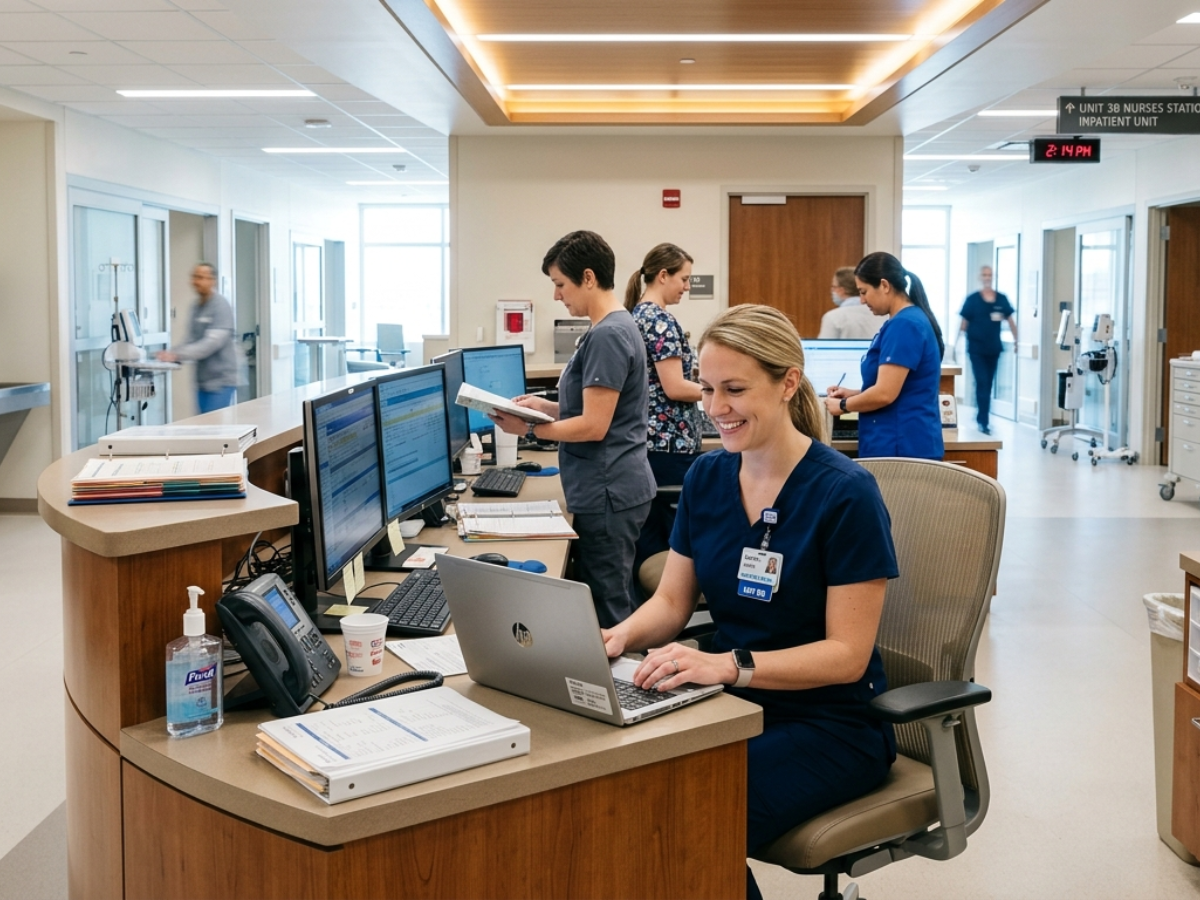
Healthcare buildings don’t wear evenly. Certain areas take a beating every single day—hallways with steady foot traffic, nurse stations that operate around the clock, rehab spaces filled with constant motion, and transition zones where patients, families, and staff cross paths. These aren’t just “busy areas.” They’re the highest‑impact zones within any medical facility, and they demand coatings designed for durability, cleanability, and long‑term performance.
In Atlanta medical centers, where patient volumes are high and buildings rarely—if ever—shut down for extended renovations, choosing the right paint system can be the difference between a space that looks professional for years… and a space that looks worn just weeks after a repaint. This is where high‑traffic coatings become essential. They’re engineered for abrasion, stains, frequent disinfecting, rolling beds, and heavy equipment.
If you’re exploring clinic interior painting ideas, it’s important to understand how these coatings work, why they matter, and how they support both patient experience and staff workflow in active healthcare environments.
Why High‑Traffic Coatings Matter in Healthcare Settings
Healthcare facilities face operational demands that normal commercial buildings simply don’t experience. Think about what moves through a typical hospital or medical office hallway in a day:
- Wheelchairs and walkers
- Gurneys and rolling beds
- Food service carts
- IV poles and medical equipment
- Staff carrying supplies
- Patients with mobility challenges
- Families moving in groups
Every one of these interactions leaves marks—scuffs, dents, streaks, shoe transfer, sanitizing residue, and bump damage. High‑traffic coatings are designed to withstand this level of abuse without breaking down, discoloring, or requiring constant touch‑ups.
They also respond better to enhanced cleaning routines, which is crucial in today’s facilities. Harsh chemicals, frequent wipe‑downs, and disinfectant sprays can degrade standard paints quickly. High‑performance products, on the other hand, are built for it.
The Role of High‑Traffic Coatings in Patient Perception
Patients don’t articulate it this way, but they instantly notice when a hallway or nurse station looks:
- Dingy
- Scuffed
- Scratched
- Patchy
- Yellowed
- Dirty even after cleaning
These visual cues shape their sense of safety and quality of care. A worn hallway creates a sense of neglect, even if clinical care is outstanding.
If you’re building a list of clinic interior painting ideas, high‑traffic coatings should be near the top. They keep heavily used areas looking clean and consistent, which improves overall patient comfort and trust.
Where High‑Traffic Coatings Make the Biggest Impact
These coatings serve a purpose across the entire facility, but they’re especially valuable in:
Hallways & Corridors
Constant traffic. Frequent wiping. Equipment collisions. Corridors are the first areas to show age.
Nurse Stations
These hubs operate nonstop. Staff lean, roll chairs, bump carts, and move supplies through narrow turns.
Rehab & Therapy Spaces
These rooms take the worst beating—adaptive equipment, gait belts, parallel bars, rolling devices, and hands touching walls constantly.
Entrance Areas & Waiting Room Pathways
These are the “first impression” zones where foot traffic peaks.
High‑traffic coatings help these surfaces stay smooth, clean, and professional, extending the life of the paint and reducing maintenance costs.
How to Choose the Right High‑Traffic Paint System
When evaluating paints for healthcare environments, consider:
-
Scrub Resistance
The coating must withstand hundreds of cleaning cycles without dulling or wearing away.
-
Sheen Level
A slight sheen (eggshell or satin) gives you durability without the harsh glare of gloss finishes.
-
Chemical Tolerance
Disinfectants used daily in Atlanta medical facilities can degrade low‑quality paints.
-
Impact Resistance
Walls near corners, turns, and station desks need coatings that won’t chip on contact.
-
Color Stability
Choose colors that resist yellowing and fading despite constant cleaning.
These are critical elements to keep in mind as you evaluate clinic interior painting ideas and determine long‑term needs for your facility.
Choosing the Right Contractor Matters Just as Much as the Paint
Even the best product fails if the contractor doesn’t understand healthcare operations. You need a team who knows:
- How to work around patient schedules
- When to restrict certain corridors
- How to install and remove containment barriers
- How to protect equipment
- How to manage odor control
- How to phase work without slowing down staff
The right partner ensures that high‑traffic coatings are installed correctly and efficiently—without disruption.
Final Thoughts
High‑traffic coatings aren’t simply an upgrade—they’re a necessity for most healthcare environments in Atlanta. They protect your investment, maintain your brand image, and support safer, cleaner, and more professional spaces across your entire facility.
When you’re ready to explore durable coating options or want the best clinic interior painting ideas for an upcoming renovation, we strongly recommend reading our Ultimate Guide to Painting Healthcare & Senior Care Facilities in Atlanta to learn everything you need to know. Then get a quote for your clinic repaint here!