
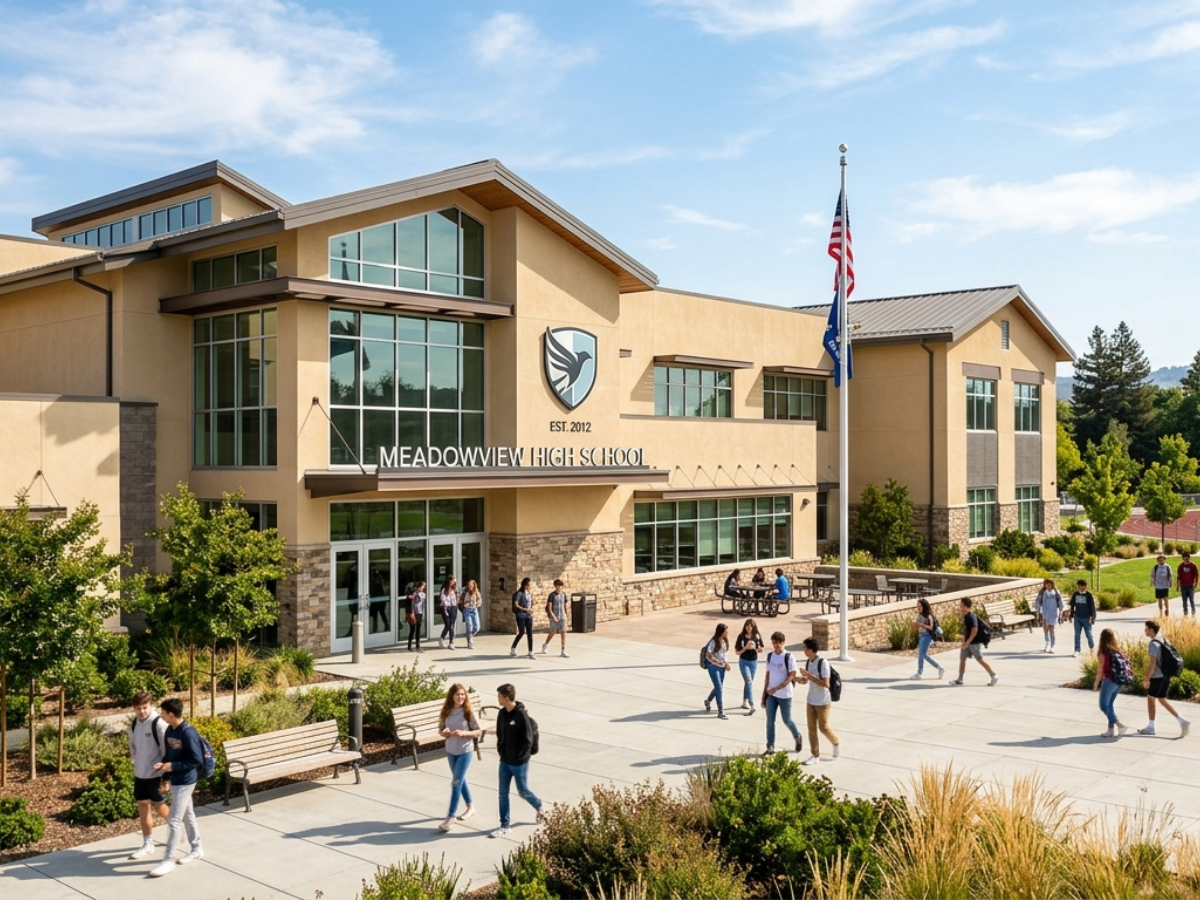
Keeping K‑12 school facilities safe, functional, and visually professional is a constant balancing act—especially when budgets are tight and buildings are in daily use. For facilities managers and operations leaders at charter and independent schools across Metro Atlanta, this question often comes up at the worst possible time: right before inspections, ahead of enrollment season, or after weather exposes issues that were easy to ignore before.
“Should we repair this—or is it time to replace it?”
It’s a fair question—and a high‑stakes one. The wrong call can lead to repeat repairs, unexpected closures, or disruptions during the school year. The right decision, on the other hand, can extend the life of your building, protect students and staff, and allow you to plan proactively instead of reacting to emergencies.
This decision most often arises with stucco exteriors, interior wallcoverings, and rusted metal surfaces—materials commonly found in Georgia’s K‑12 school buildings. Below, we break down when repair makes sense versus when replacement is the smarter long‑term investment, using a school‑specific lens shaped by real‑world conditions in Metro Atlanta.
Stucco Exteriors in K‑12 Schools: Repair or Replace?
Stucco remains a popular exterior finish for schools thanks to its durability and clean appearance. However, when stucco begins to fail, the issue is rarely just cosmetic. What starts as a small crack can quietly develop into moisture intrusion that affects insulation, indoor air quality, and interior spaces.
When Stucco Repair Is the Right Choice
Stucco repair is often sufficient when:
- Cracks are hairline or surface‑level
- Damage is isolated rather than widespread
- There are no signs of underlying moisture intrusion
- The stucco system is relatively new or has been well maintained
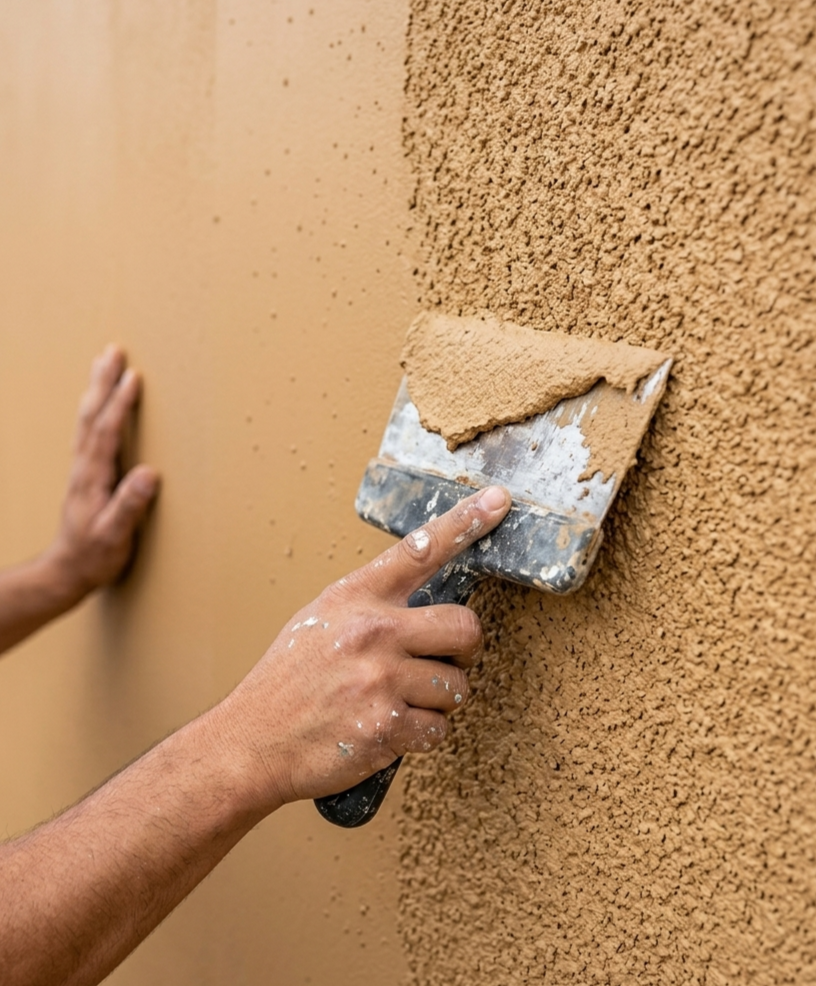 During professional stucco evaluations, one of the first indicators assessed is whether cracks are truly isolated or repeating in patterns that suggest deeper system stress. When the structure is sound, targeted patching, sealing, and repainting can restore the façade and protect it from further deterioration—often at a fraction of the cost of full replacement.
When Stucco Replacement Is the Smarter Long‑Term Decision
Replacement is usually the better option when:
- Cracks are wide, spreading, or recurring despite prior repairs
- There is evidence of water damage, mold, or delamination
- Stucco failure appears across multiple elevations
- Previous repairs have not held over time
For K‑12 schools, moisture intrusion is more than a maintenance concern—it directly affects health, operations, and liability. When stucco issues are systemic, replacement helps avoid escalating repair costs, indoor air quality risks, and unexpected disruptions during the school year.
Interior Wallcoverings in Schools: Repair, Repaint, or Replace?
Interior wallcoverings take constant wear and tear in K‑12 environments. Hallways, cafeterias, classrooms, and restrooms see daily traffic—backpacks scraping walls, carts hitting corners, and custodial teams cleaning aggressively to keep spaces presentable.
When Wallcovering Repair Makes Sense
Repair may be appropriate if:
- Seams are lifting in small, isolated sections
- There are minor tears, scuffs, or impact marks
- The wallcovering remains well adhered overall
In these situations, spot repairs paired with repainting or protective coatings can extend the life of wallcoverings and improve appearance without the cost or downtime of full replacement.
When Wallcovering Replacement Is the Better Option
Replacement should be considered when:
- Wallcoverings are peeling extensively
- Moisture damage or mold is present
- Materials are outdated, unsanitary, or difficult to clean
- Repairs would be frequent or highly visible
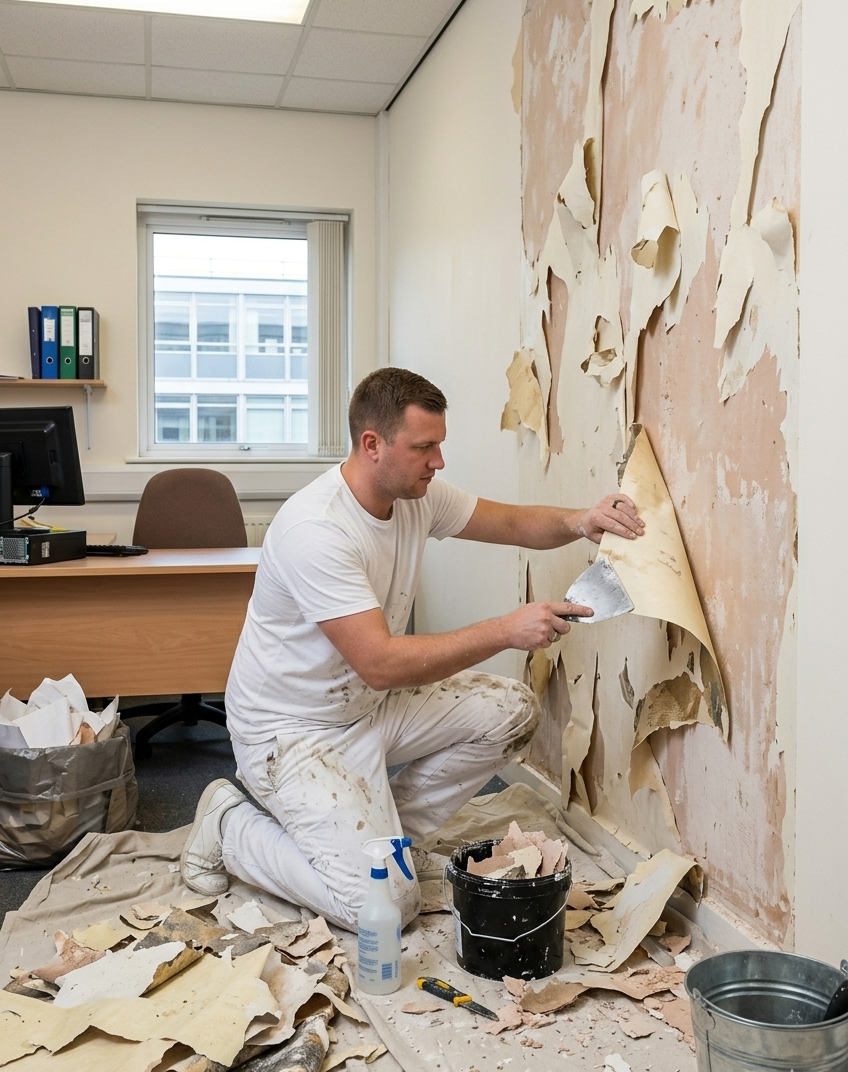 Many Metro Atlanta schools are transitioning from wallcoverings to durable, cleanable paint systems designed for long‑term performance. While replacement may feel like a larger upfront investment, it often reduces ongoing maintenance, improves hygiene, and creates a more consistent, professional appearance. It also allows schools to update colors and finishes to support branding or wayfinding.
Rusted Metal in School Facilities: Treat or Replace?
From handrails and door frames to exterior stairs and fencing, rusted metal is both a safety concern and a visual red flag in school environments. It is also one of the first things inspectors, parents, and visitors tend to notice.
When Rust Can Be Repaired
Repair and restoration are effective when:
- Rust is surface‑level with no deep pitting
- The metal remains structurally sound
- Damage is localized to specific areas
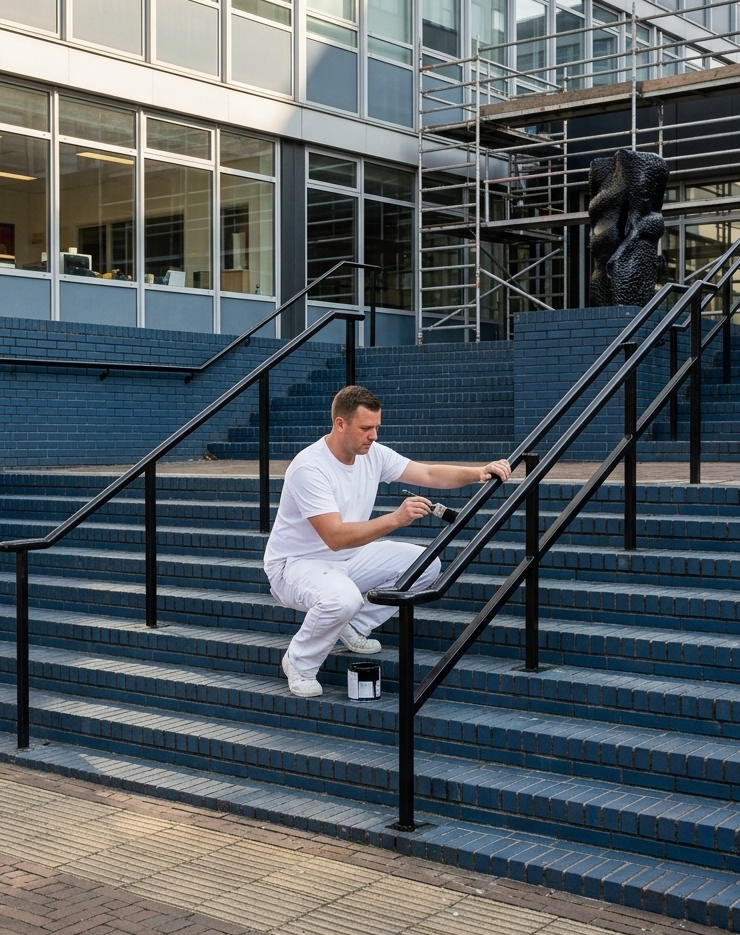
With proper preparation—abrasive cleaning, rust‑inhibiting primers, and high‑performance coatings—metal components can often be stabilized and protected for years.
When Metal Replacement Is Required
Replacement is the safer option when:
- Rust has compromised structural integrity
- Metal components are warped, cracked, or unstable
- The area is load‑bearing or safety‑critical
- Corrosion is widespread and ongoing
In these cases, replacement is not about appearance—it is about student and staff safety, liability reduction, and long‑term reliability.
School‑Specific Factors That Should Guide Repair vs. Replacement Decisions
In our experience working with K‑12 schools across Metro Atlanta, repair‑versus‑replace decisions should consider more than visible damage alone. Facilities teams must also weigh:
- Student safety and accessibility
- Code compliance and inspection requirements
- Scheduling around the academic calendar
- Total lifecycle cost—not just upfront price
- Potential disruption to learning environments
A solution that appears cheaper today can become far more expensive if it requires frequent touch‑ups or emergency repairs during the school year.
A Trusted Facilities Partner for Metro Atlanta Schools
As members of the Georgia Charter Schools Association (GCSA) and corporate sponsors of the Georgia Independent School Association (GISA), we understand the operational, budgetary, and scheduling challenges schools face throughout Metro Atlanta.
Our approach is consultative. We do not push replacement when repair makes sense—and we do not recommend short‑term fixes that create long‑term problems. Our role is to help facilities and operations teams understand the real lifespan, risk, and maintenance implications of each option so decisions are made with clarity, not pressure.
If you are evaluating multiple surfaces or planning phased improvements, our comprehensive resource—Ultimate Guide to Painting K‑12 Charter & Independent Schools in Atlanta—dives deeper into best practices, timelines, and material selection tailored specifically for local schools.
Frequently Asked Questions: Repair vs. Replace in K‑12 Schools
How do schools know when stucco repair is no longer enough?
When cracks recur, moisture intrusion is present, or damage spans multiple areas, replacement is typically the safer and more cost‑effective long‑term solution.
When cracks recur, moisture intrusion is present, or damage spans multiple areas, replacement is typically the safer and more cost‑effective long‑term solution.
Is wallcovering repair cost‑effective in K‑12 buildings?
Yes—when damage is minor and isolated. However, frequent or highly visible repairs often signal that replacement will reduce maintenance over time.
Yes—when damage is minor and isolated. However, frequent or highly visible repairs often signal that replacement will reduce maintenance over time.
Can rusted metal at schools be safely repaired?
Surface‑level rust can often be treated. Structural or load‑bearing corrosion should always be replaced to ensure safety and compliance.
Surface‑level rust can often be treated. Structural or load‑bearing corrosion should always be replaced to ensure safety and compliance.
Why does timing matter for school facility repairs?
Scheduling repairs around the academic calendar helps prevent learning disruptions, emergency closures, and inspection issues.
Scheduling repairs around the academic calendar helps prevent learning disruptions, emergency closures, and inspection issues.
Should schools focus on upfront cost or lifecycle cost?
Lifecycle cost is the better metric. Repeated short‑term repairs often exceed the cost of timely replacement.
Lifecycle cost is the better metric. Repeated short‑term repairs often exceed the cost of timely replacement.
Final Takeaway: Repair Strategically, Replace to Protect the Future
For stucco, wallcoverings, and rusted metal, the right decision is not always obvious—but it should always be intentional. Strategic repairs can preserve budgets and buy time, while timely replacement can prevent safety issues and costly emergencies.
If your school is unsure which path makes sense, a professional assessment does not lock you into a project—it gives you the clarity to plan improvements on your terms and protect your campus for the long run. Contact us!