
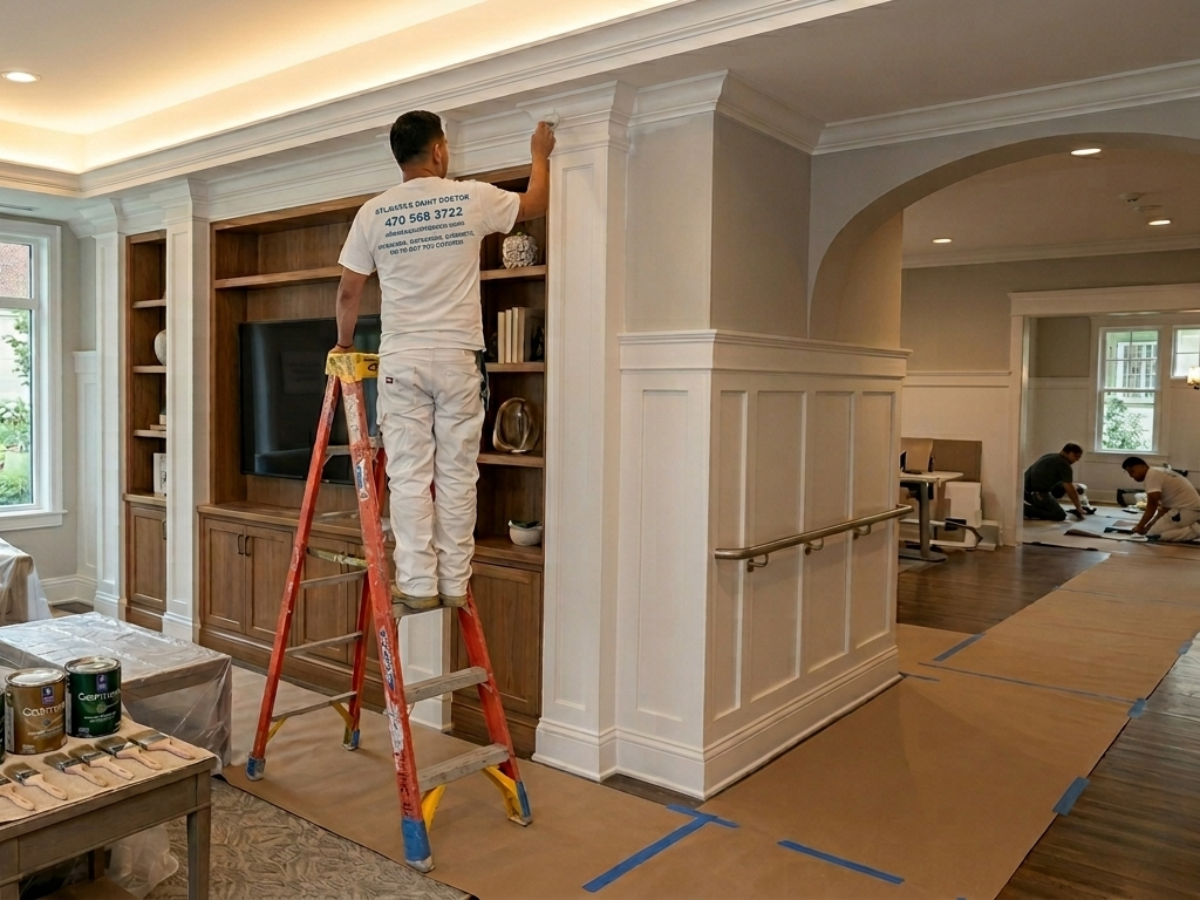
Maintaining a clean, safe, and healthy environment is a top priority in any assisted living or senior care community—especially in Metro Atlanta, where facilities operate at full capacity and remain occupied 24/7. Repainting is more than a cosmetic upgrade in these environments; it’s an infection‑control measure that directly impacts resident safety, staff operations, and regulatory compliance.
And because both interior and exterior repainting can introduce odors, airborne particles, moisture shifts, and traffic disruptions, assisted living communities must choose a painter who understands healthcare‑level protocols—not just commercial painting basics.
This guide covers the essential infection‑control questions every assisted living administrator, property manager, or director of operations should ask before hiring a painting contractor.
For a deeper breakdown of compliance, coatings, phasing, and safety strategies, explore the Ultimate Guide to Painting Healthcare & Senior Care Facilities in Atlanta.
Why Infection‑Conscious Painting Matters in Assisted Living Environments
Assisted living facilities combine the constant activity of a residential building with the sensitivity of a healthcare setting. Painting can affect:
- Air quality
- Allergen exposure
- Resident mobility & fall prevention
- Surface sanitization
- Moisture control
- Staff workflows and care routines
- Family confidence in the facility
Because communities remain fully occupied during painting work, infection‑control practices must guide every decision—from the coatings selected to the containment practices used.
-
Are You Using Zero‑VOC, Low‑Odor, and Fast‑Cure Interior Coatings?
This is the first and most important question to ask.
In assisted living and senior care environments, paint fumes can impact residents with:
- Respiratory issues
- Mobility limitations
- Compromised immune systems
- Memory care sensitivities
Your painter should be able to provide:
✓ Zero‑VOC paint options
Safe for enclosed rooms, corridors, memory care wings, and dining areas.
✓ Ultra low‑odor formulations
To prevent discomfort or nausea in sensitive residents.
✓ Fast‑curing systems
Minimizing downtime and exposure in active hallways or dining spaces.
These coatings are required inside—but they’re recommended for certain exterior areas too, especially around entrances or high‑traffic outdoor amenities.
-
How Will YouContain Dust, Particles, and Airborne Debris?
Interior infection‑control protocols should include:
- Plastic containment barriers
- Floor and handrail protection
- HEPA filtration or negative‑air equipment (when sanding or repairing)
- Controlled debris removal
- No open containers of sanding residue or waste
- Clean, organized staging zones
Exterior projects should also prevent airborne debris from entering:
- Courtyards
- Patios
- HVAC intakes
- Memory care exits
- Covered entryways
A qualified contractor will integrate these practices without you having to ask twice.
-
Do You Follow Healthcare‑Appropriate Cleanliness Protocols?
Painters working in active assisted living settings should demonstrate:
- Gloves + PPE when appropriate
- Daily sanitization of touchpoints
- Clean tool storage away from resident areas
- No materials left in walk paths
- End‑of‑day cleanup that meets healthcare cleanliness standards
If the contractor doesn’t mention these procedures proactively, they’re not healthcare-ready.
-
How Will You Phase Work to Avoid Resident Disruption?
Painting in occupied facilities requires micro‑phasing—small, controlled sections that minimize exposure.
Ask your painter:
- Will work happen wing‑by‑wing or hallway‑by‑hallway?
- How will you schedule around medication passes, meal times, and therapy?
- How will you maintain safe resident access during exterior work?
- What’s your plan for memory‑care spaces, where disruptions can be triggering?
Infection control isn’t just about materials—it’s about workflow.
-
Do Your Coatings Support Infection Prevention?
Healthcare‑appropriate coatings offer:
✓ Scrubbability
Resist frequent cleaning with disinfectants.
✓ Antimicrobial or moisture‑resistant surfaces
Helpful in restrooms, dining rooms, and nurse stations.
✓ Stain & abrasion resistance
Prevents buildup of residue from mobility devices, carts, or walkers.
Interior coatings should align with cleaning protocols used by your housekeeping team.
-
How Do You Protect High‑Touch and High‑Risk Zones?
Every assisted living facility has areas that require special attention:
- Handrails
- Chair rails
- Doors and frames
- Elevators
- Nurse stations
- Restrooms
- Dining areas
These should be repainted with durable coatings that withstand constant sanitization.
Exterior high‑touch zones also matter:
- Entrance doors
- Handrails at ramps
- Covered walkways
- Seating areas
Even outdoor repainting affects infection control when residents regularly touch these surfaces.
-
Will Your Crew Work Quietly and Respectfully Around Residents?
This may seem unrelated—but in senior care environments, emotional safety is part of infection‑control.
Stress, confusion, and disorientation increase fall risks and behavioral escalation in memory‑care communities. Your painter should commit to:
- Quiet work
- Minimal odors
- Soft equipment placement
- No shouting or loud radios
- Respect for resident privacy
This is not optional. It’s foundational.
-
How Will You Communicate with Staff, Residents, and Families?
A healthcare‑ready painter should provide:
- A communication plan
- Maps or color‑coded zones
- Daily progress updates
- Notices to residents and families
- Dedicated points of contact
Clear communication reduces anxiety and prevents unnecessary exposure.
-
Are Your Workers Trained for Senior Care Environments?
Ask about:
- HIPAA‑adjacent behavior expectations
- De‑escalation etiquette
- Memory care sensitivity training
- Safety and fall‑prevention awareness
- “Do not disturb” protocols
Painting crews should feel like partners, not disruptions.
-
Can You Support Both Interior and Exterior Healthcare Painting Requirements?
A painter who can manage both interior and exterior work under infection‑control guidelines is rare—and incredibly valuable.
They must understand:
Interior Standards
- Air quality
- Cleaning protocols
- Fast‑cure products
- Resident safety
Exterior Standards
- Safe walkway access
- Odor management near entrances
- Weather‑appropriate materials
- Safety around mobility devices
- Controlled staging areas
Choose a contractor who is skilled in both environments—not one who “specializes” in only one side.
Final Thoughts
Infection‑conscious painting is not a luxury; it’s a requirement for safe, high‑quality senior care in Metro Atlanta. When repainting both interior and exterior areas of an assisted living or senior community, your contractor must bring healthcare‑level attention to detail, safety, communication, and resident comfort.
For a full roadmap to planning safe, compliant, low‑disruption painting projects, explore the Ultimate Guide to Painting Healthcare & Senior Care Facilities in Atlanta.
Ready to schedule an infection‑control‑conscious repaint for your assisted living community? Let’s plan your upcoming project.