
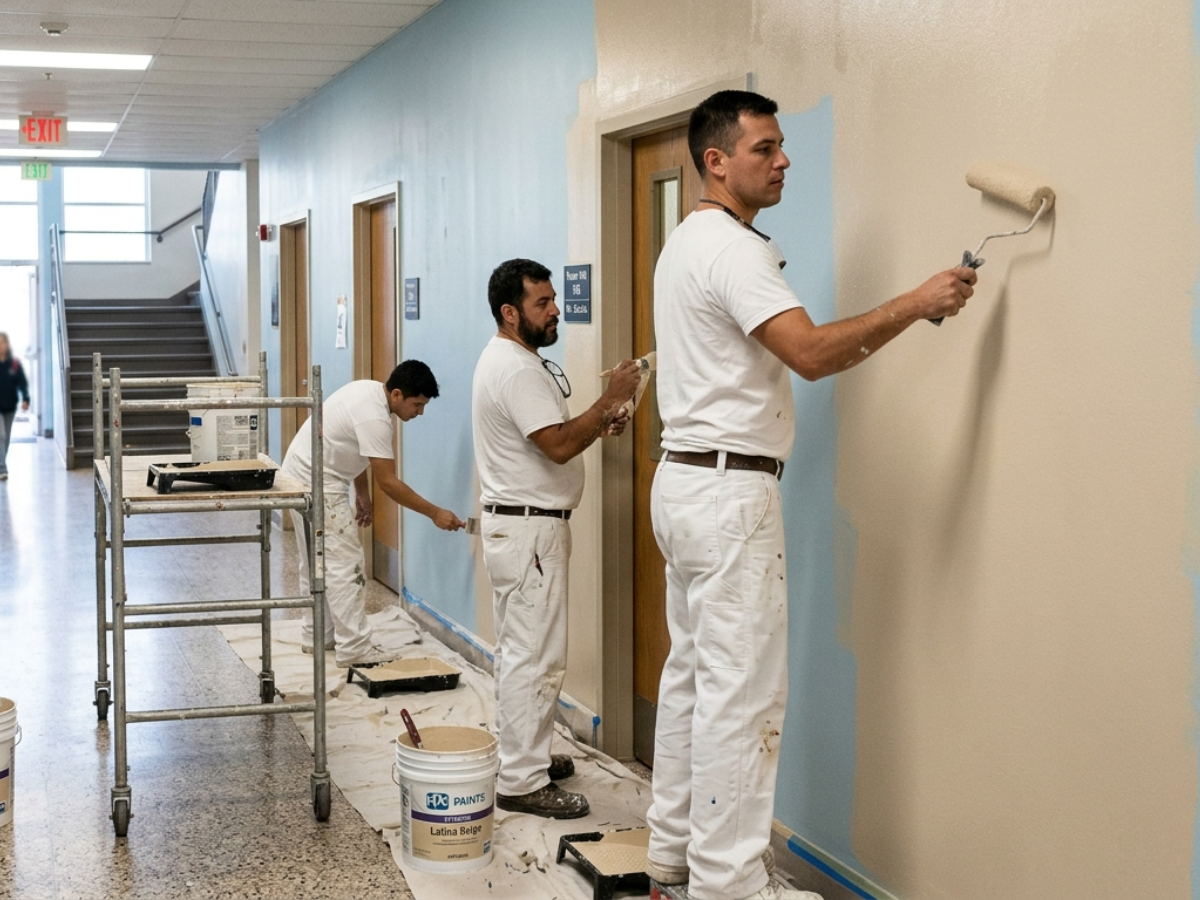
Choosing the right school painting contractor in Atlanta isn’t just about fresh walls—it’s about protecting students, staff, facilities, and your school’s reputation.
Most charter and independent schools don’t have the luxury of flexible timelines or trial‑and‑error vendors. Summer repainting must fit between camps, inspections, orientation weeks, and fall move‑in—while parents, teachers, and boards are paying close attention.
For schools, hiring a painting contractor isn’t a cosmetic decision. It’s an operational one.
Why School Painting in Metro Atlanta Is Different
Painting a K‑12 campus comes with higher expectations than a typical commercial project. For Metro Atlanta schools, the stakes are higher because:
- Safety and background checks matter
- Strict schedules (summer, breaks, after‑hours) must be respected
- Coatings must withstand heavy student traffic
- Low‑odor, low‑VOC products are non‑negotiable
- Professionalism reflects directly on your school
As members of the Georgia Charter Schools Association (GCSA) and corporate sponsors of the Georgia Independent School Association (GISA), we work closely with school leaders, operations teams, and facilities managers every day. That experience shapes how we plan, schedule, and execute school painting projects.
Below is a practical guide to what your school should look for before signing any painting contract.
For broader planning considerations, explore our Ultimate Guide to Painting K‑12 Charter & Independent Schools in Atlanta.
For broader planning considerations, explore our Ultimate Guide to Painting K‑12 Charter & Independent Schools in Atlanta.
1. Look for Proven Experience in K‑12 School Environments
Not every commercial painter is qualified to work in schools. One of the most common mistakes schools make is hiring a contractor with general commercial experience—but no K‑12 background.
Questions to Ask a School Painting Contractor
- Have they worked with charter or independent schools before?
- Can they show experience on Metro Atlanta campuses?
- Do they understand the difference between repainting an office and working in a live school environment?
Why General Commercial Experience Isn’t Enough
Schools operate differently. An experienced school contractor understands:
- School calendars and summer pressure points
- How to work around students, teachers, and administrators
- Campus security and visitor protocols
- Clear communication with boards, operations teams, and facilities managers
Experience with schools isn’t a bonus—it’s a requirement.
2. Verify Safety, Background Checks & Compliance
Schools carry a higher duty of care than typical commercial sites. Your contractor should be prepared—and comfortable—answering detailed safety questions.
Crew Vetting & School Safety Protocols
Ask:
- How are crew members vetted and background‑checked?
- Are crews trained on school safety and visitor procedures?
- How are ladders, tools, and materials secured when students are present?
- What is the policy on interaction with students and staff?
Insurance, Documentation & Risk Management
You should expect:
- Proof of general liability and workers’ compensation insurance
- Written safety and site‑management protocols
- Clear confirmation that all crew members are background‑checked
If answers are vague or incomplete, that’s a risk schools shouldn’t have to manage.
3. Ask About Scheduling Around School Operations
For schools, when the work happens is just as important as how it’s done.
Summer, Breaks & After‑Hours Work
An experienced school painting contractor will be able to:
- Work during summer break, winter break, or after‑hours only
- Phase projects to keep offices, corridors, and entrances operational
- Coordinate around camps, athletics, and campus events
Flexibility When School Plans Change
School schedules rarely stay static. Contractors with real school experience plan for flexibility rather than reacting when changes occur.
Ask directly:
- “How do you handle summer school painting in Atlanta when programs are on site?”
- “What happens if part of the campus needs to open earlier than planned?”
Generic answers often signal limited school experience.
4. Confirm Use of Low‑VOC, Low‑Odor, School‑Safe Products
In schools, paint selection isn’t just technical—it’s a health decision.
Your contractor should:
- Specify low‑VOC or zero‑VOC interior paints
- Minimize odors as much as possible
- Understand district or association health guidelines
- Clearly explain why each product is appropriate for a K‑12 environment
Health Considerations in Learning Spaces
This is especially important for:
- Classrooms
- Early learning spaces
- Special education areas
- Administrative offices
“Safe enough for a warehouse” is not the same as “safe enough for a classroom.”
5. Choose High‑Traffic, Long‑Life Coatings
Schools are some of the most demanding environments for paint performance.
Hallways, Stairwells & Common Areas
These spaces experience:
- Heavy foot traffic
- Frequent cleaning and disinfecting
- Impact from backpacks, carts, and equipment
Gyms, Locker Rooms & Specialty Spaces
A dependable school painting contractor will recommend:
- Scrubbable, high‑performance coatings
- Moisture‑resistant paints for gyms and locker rooms
- Scuff‑resistant products for athletic and multi‑use spaces
- Sheen levels selected for durability and maintenance—not just appearance
Choosing the wrong products leads to premature wear and higher long‑term costs.
6. Demand a Clear, Detailed Scope of Work
A professional school painting contractor should provide more than “paint walls.”
What a Proper School Painting Scope Includes
Look for clarity on:
- Areas included and excluded (rooms, wings, buildings)
- Surface preparation (patching, sanding, caulking, priming)
- Products and sheens listed by location
- Number of coats and application methods
- Project schedule and phasing
- Daily cleanup and site reset expectations
A detailed scope protects your school from surprises and keeps leadership, facilities, and finance teams aligned.
7. Evaluate Communication & On‑Campus Professionalism
The best contractor feels like a partner—not just a vendor.
They should:
- Communicate clearly and promptly
- Provide a dedicated point of contact
- Flag issues before they become problems
- Respect front‑office staff, teachers, students, and routines
Schools are public‑facing environments. Professionalism on campus reflects directly on your institution.
8. Plan for Maintenance & Future School Projects
Facilities decisions often outlast individual administrators.
Color Schedules, Documentation & Continuity
The right contractor helps schools think long‑term by offering:
- Multi‑year painting and maintenance planning
- Documentation of colors, finishes, and products campus‑wide
- Touch‑up packages or periodic inspections
We help schools maintain consistency year over year through a color schedule system. Each project is documented by area, finish, and shade and stored in a dedicated client file. When it’s time for touch‑ups or future projects, schools aren’t guessing—we return to the established schedule and keep everything consistent across campus.
This documentation becomes institutional memory, especially valuable as staff and leadership change.
Final Thoughts: Choosing the Right School Painting Contractor in Atlanta
Hiring a school painting contractor Atlanta administrators can truly trust means looking beyond price and availability.
The right partner understands:
- K‑12 safety and vetting requirements
- Complex school schedules and summer constraints
- High‑traffic durability needs
- Low‑odor, low‑VOC product standards
- Professional communication in a school setting
As GCSA members and GISA corporate sponsors, we know how important it is to work with vendors who respect your mission and support your operations—not complicate them.
For a deeper planning framework—inside and out—visit our Ultimate Guide to Painting K‑12 Charter & Independent Schools in Atlanta.
If you’re planning an upcoming school project, we’re here to help.
If you’re planning an upcoming school project, we’re here to help.