
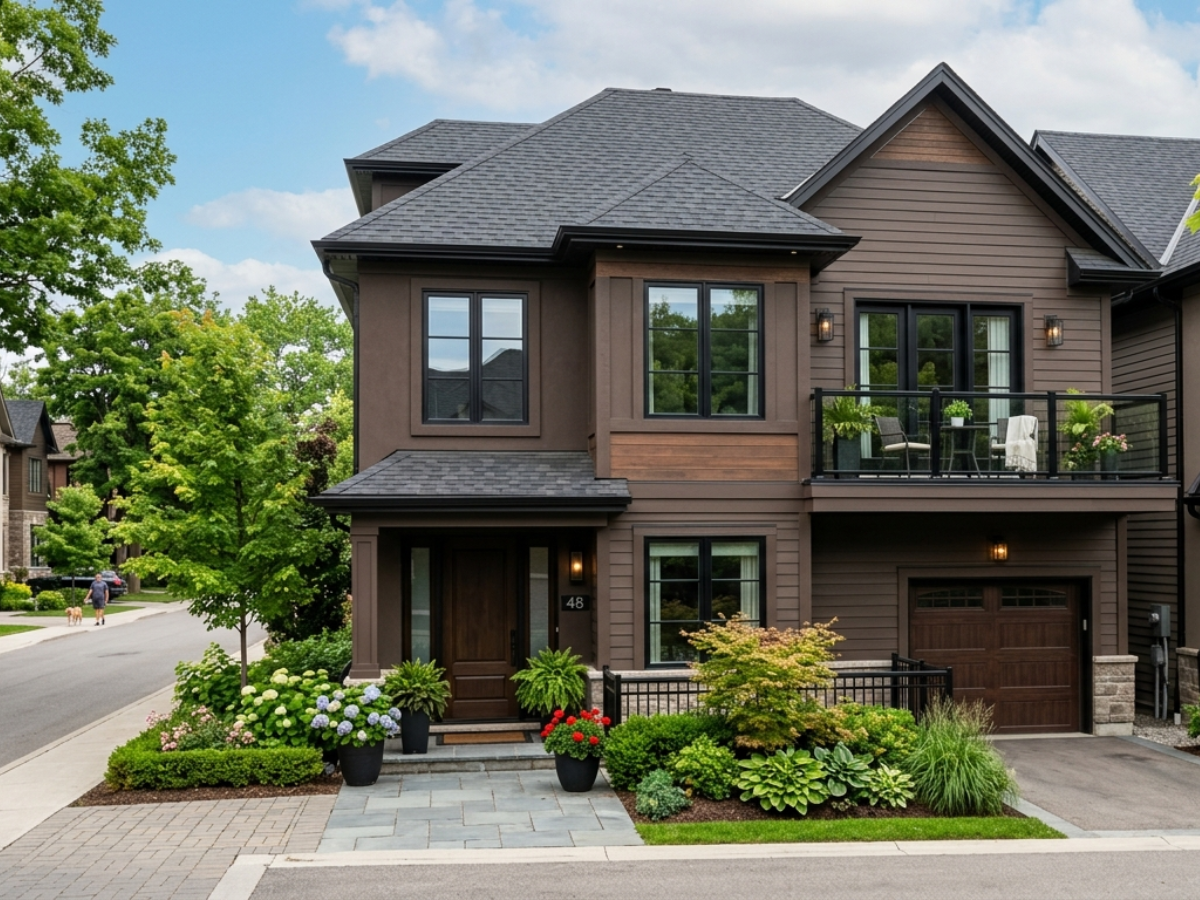
Dark exterior colors have become one of the biggest curb‑appeal trends in Atlanta real estate. Matte charcoal trim, deep navy façades, espresso‑tone siding, black shutters—townhome communities in Sandy Springs, Buckhead, and Brookhaven are increasingly adopting richer palettes to modernize their look.
As Atlanta’s Townhome Doctor, we help communities understand how darker color choices behave long‑term so boards can make confident, climate‑informed decisions.
Atlanta’s climate—hot sun, heavy rainfall, intense humidity, and rapid temperature swings—affects dark colors more severely than lighter options. And in townhome communities, where multiple units share façades, misjudging how a color performs over time can impact entire buildings, not just a single home.
If your board or management team is considering darker palettes to boost curb appeal painting Atlanta neighborhood aesthetics, here’s what you need to know before approving colors, choosing coatings, or scheduling your next multi‑building repaint.
For a full operational overview of repaint planning, see The Complete Guide to Townhome Exterior Painting in Atlanta: HOA Rules & Timing.
Why Dark Colors Behave Differently on Townhome Exteriors
Dark paint colors have a different relationship with sunlight, heat, and moisture than lighter colors. They absorb more heat, show more fading, and reveal imperfections faster—especially on older siding systems.
In Brookhaven and Buckhead townhome communities, where stucco, fiber cement, wood trim, and metal accents often mix across a single elevation, dark colors can heighten contrasts in ways boards don’t expect.
Here are the major considerations.
-
Fading Happens Faster with Dark Colors
Atlanta’s UV exposure is no joke. Our region averages stronger UV days than many northern and midwestern cities, and dark pigments break down quicker under this intensity.
Why dark colors fade faster:
- Higher pigment concentration = faster UV breakdown
- South- and west‑facing elevations take more heat
- Multi‑story façades experience uneven fading across heights
- Repaints appear mismatched sooner than lighter palettes
In a detached home, fading affects one house.
In a townhome building, fading can cause:
- Patchy differences between units
- Variations in sheen or saturation
- The appearance of poor maintenance—hurting curb appeal
If your community’s brand aesthetic depends on clean, modern lines, this is critical.
-
Heat Absorption Can Affect Siding Longevity
Dark colors absorb significantly more heat than mid‑tones or lighter colors. On materials like fiber cement or wood trim, this can create:
- Thermal expansion
- Warping
- Accelerated caulk failure
- Premature paint film breakdown
- Gaps where moisture can intrude
In Sandy Springs and Buckhead, where many townhome communities feature tall, shared walls with heavy sun exposure, heat absorption becomes a major maintenance factor.
Elastomeric caulking and high‑quality acrylic coatings help—but they don’t eliminate thermal stress entirely.
-
Moisture Shows Up More on Dark Paint
Atlanta humidity + dark paint = visible moisture patterns.
Common issues include:
- Drip lines after storms
- “Ghosting” where water evaporates unevenly
- Highlighted mildew growth around shaded areas
- Streaking from gutters or rooflines
- Flashing bleed‑through around windows
Dark colors don’t cause moisture problems, but they expose them—much more clearly.
Communities in Brookhaven often see this with dark trim on fiber cement and stucco façades, especially in areas with limited sunlight.
-
Dark Colors Require Stricter Prep Standards
This is the part many boards and property managers underestimate.
Dark palettes demand higher‑quality prep because they reveal:
- Surface imperfections
- Patchwork repairs
- Old caulk lines
- Faint differences in substrate texture
- Inconsistent sheen from painter touch‑ups
If you choose a dark exterior palette, budget accordingly for:
- Smoother substrate prep
- Seamless caulking
- Sanding and leveling
- Color‑matched primer zones
- More frequent maintenance inspections
This is why many professional teams strongly recommend a full community color strategy before switching to darker tones.
Which Dark Colors Perform Best in Atlanta Townhome Communities?
Not all dark colors age at the same pace.
Some hold up better in Atlanta’s climate and multi‑unit environments.
Colors that perform reasonably well:
- Charcoal Gray (deep but not black)
- Slate Blue (navy‑inspired but softened)
- Forest Green (rich but resistant to haze)
- Espresso Brown (warmer and slower to fade)
Colors to approach carefully:
- True Black (shows heat and moisture issues fastest)
- Deep Navy (beautiful but fades into uneven blue‑gray tones)
- Dark Maroon (high fading risk in Atlanta sun)
Working with a contractor experienced in curb appeal painting Atlanta neighborhood upgrades can help narrow the palette to colors engineered for UV resistance and longevity.
How Townhome Boards Should Evaluate Dark Color Requests
Before approving a dark color scheme, boards and managers in Sandy Springs, Buckhead, and Brookhaven should ask:
-
What direction do our buildings face?
South and west elevations fade fastest.
-
What siding materials do we have?
Stucco + dark colors = high failure risk
Fiber cement + dark colors = more stable but still fade‑prone
Wood trim + dark colors = high heat expansion
-
Are we prepared for the maintenance cycle?
Darker colors may require:
- More frequent touch‑ups
- More cleaning
- Repaints sooner than lighter palettes
-
Do we have the budget for higher‑quality paint systems?
Premium UV‑resistant formulations are strongly recommended.
-
Will this color be consistent across multi‑unit buildings?
Townhome rules demand uniform appearance.One building fading faster than another is a major concern.
Boards should also review long-term community color strategies. For guidance on timing, approvals, and multi‑building sequencing, see The Complete Guide to Townhome Exterior Painting in Atlanta: HOA Rules & Timing.
How to Make Dark Exterior Colors Last Longer
If your community is set on dark colors, here’s how to maximize their lifespan:
✔ Choose premium UV‑resistant coatings
Not all paints are created equal.
✔ Use a satin sheen (not flat)
Satin reduces moisture visibility and improves washability.
✔ Apply additional coats
Two coats = standard
Three coats = better performance on dark substrates
✔ Invest in better prep
Especially around trim, joints, and patchwork.
✔ Add yearly inspections
Catch early fading, peeling, or moisture streaking.
✔ Standardize building‑wide color formulations
Prevents variation between repaint phases.
Final Thoughts
Dark exterior colors can dramatically elevate the visual identity of a townhome community—but only when paired with the right products, expectations, and maintenance strategy.
In Sandy Springs, Buckhead, and Brookhaven, where architectural styles vary and the sun exposure can be intense, choosing the wrong dark tone can shorten repaint cycles, expose moisture issues, and create uneven color wear across multi‑unit façades.
Before making a shift toward darker palettes, boards and property managers should fully understand the long-term implications for curb appeal, durability, and building-wide consistency.
As Atlanta’s Townhome Doctor, we’re here to help townhome communities evaluate color risks, choose the right systems, and plan long‑lasting exterior strategies with confidence.
If you’re planning a repaint or evaluating new color standards for your townhome community, let’s talk about your upcoming repaint.