
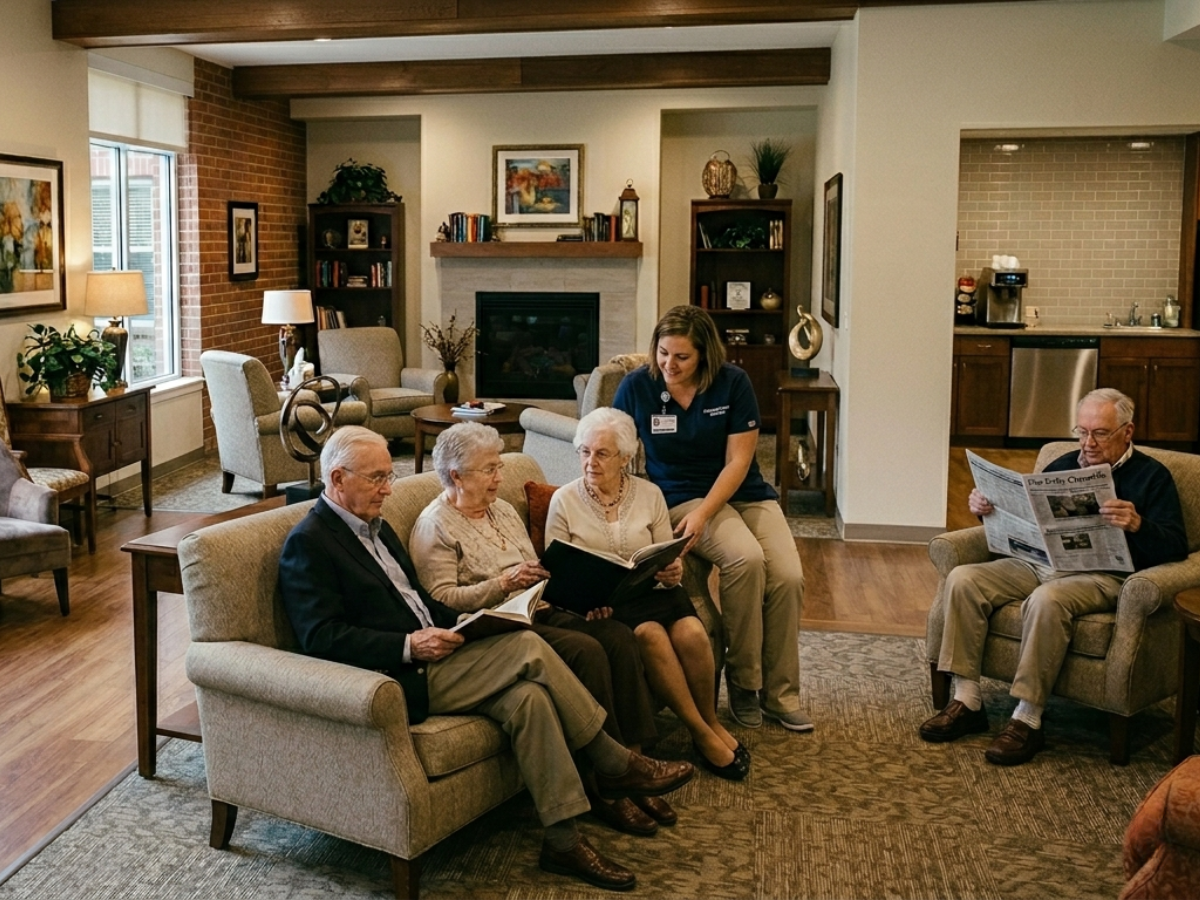
Repainting an occupied assisted living or senior care facility is one of the most complex maintenance projects a property manager can plan. Unlike traditional commercial spaces, these communities involve vulnerable residents, regulated environments, and 24/7 operations where safety, comfort, and consistency matter just as much as appearance.
As Atlanta’s senior living populations grow—and facility expectations rise—Metro Atlanta communities need repainting strategies that prioritize resident well‑being, operational precision, and strict adherence to healthcare standards.
This guide breaks down how to repaint both interior and exterior assisted living environments with minimal disruption to residents and staff.
For deeper planning frameworks, color systems, operational sequencing, and compliance guidance, see the Ultimate Guide to Painting Healthcare & Senior Care Facilities in Atlanta.
Why Repainting Occupied Assisted Living Facilities Requires a Specialized Approach
Assisted living and senior care properties combine the sensitivities of healthcare settings with the logistical challenges of multi‑unit buildings. Painting directly influences:
- Safety (slip‑resistant floors, non‑glare finishes, low‑odor systems)
- Sanitation (scrubbable, antimicrobial coatings)
- Comfort (calm palettes, zero‑VOC applications)
- Navigation (wayfinding through color)
- Resident dignity (minimal disruption, respectful workflow)
The goal isn’t just “getting the job done.” It’s repainting in a way that respects:
- Daily medication schedules
- Meal service times
- Therapy sessions
- Mobility limitations
- Noise sensitivity
- Memory care considerations
-
Start with a Facility‑Specific Assessment
Every assisted living community operates differently. Before scheduling a repaint, evaluate:
Interior Needs
- Resident room repaint cycle
- Hallway and corridor wear
- Dining and activity spaces
- Nurse stations and medication rooms
- Memory care units (require softer palettes and low‑stimulation finishes)
Exterior Needs
- High‑sun elevation fading
- Handrails, fascia, and trim
- Entry canopies and covered walkways
- Parking‑lot adjacency and access impacts
A professional senior living painting partner should conduct a site walk, provide material inventory, and map out logistical challenges.
-
Use Low‑Odor, Low‑VOC, and Fast‑Cure Coatings
Because residents remain onsite during the project, material safety is non‑negotiable.
Choose coatings that provide:
✓ Zero‑VOC formulas
Safe for enclosed environments and residents with respiratory sensitivities.
✓ Low‑odor application
Prevents discomfort during interior work.
✓ Fast‑curing systems
Reduces downtime for busy hallways, dining areas, or entry points.
✓ Scrubbable + antimicrobial finishes
Helps meet cleanliness standards, especially in high‑touch areas.
-
Plan Around Resident Routines and Facility Workflows
Metro Atlanta communities often run tight schedules. Align painting around:
- Medication pass times
- Housekeeping cycles
- Visiting hours
- Therapy/activities
- Meal service
- Quiet hours
- Bathing/ADL schedules
A skilled contractor should work with your operations team—not against it.
-
Phase Work in Contained, Predictable Zones
Creating “micro‑zones” keeps facilities running smoothly.
Examples:
- Paint one hallway at a time—never multiple hallways simultaneously.
- Rotate dining rooms or activity spaces during off‑hours.
- For exterior repainting, block off small sections of walkways, not entire paths.
Phasing ensures accessibility, comfort, and continued use of essential areas.
-
Prioritize Noise & Disruption Control
Painting in assisted living communities requires:
- Quiet equipment
- Efficient prep
- Soft‑close ladders
- Short‑duration sanding
- Minimal taping footprint
- No lingering equipment in walk paths
Crews should work “invisible” whenever possible.
-
Enhance Wayfinding with Strategic Color
Color can support aging residents by:
- Improving navigation
- Distinguishing floors/wings
- Reducing confusion in memory care units
- Highlighting entrances and exits safely
Strategic accents can improve daily life and reduce staff redirection time.
-
Ensure Full Compliance with Healthcare Standards
Repainting in assisted living requires:
- Strict cleanliness practices
- Proper dust containment
- PPE for crews
- Protection of medical equipment
- Respectful behavior around residents
- Clear communication with nursing and management
Your painting partner should behave like a healthcare contractor, not a general commercial painter.
-
Communicate Clearly With Residents, Families, and Staff
Communication should include:
- Color‑coded maps
- Daily updates
- Email + printed notices
- A “What to Expect” guide for residents
- A single point of contact for questions
Transparent communication builds trust, reduces anxiety, and minimizes complaints.
-
Exterior Work: Manage Safety, Access, and Weather Risks
For exterior projects, consider:
- Covered walkway access
- Respiratory sensitivities (choose low‑odor systems here too)
- Weather and humidity (Metro Atlanta’s biggest challenge)
- Doorway access and fall risks
- Parking lot caution zones
Exterior repainting is highly visible—proper sequencing protects both residents and curb appeal.
-
Choose a Contractor Who Specializes in Senior Care
Your painting partner should be able to demonstrate:
- Experience in occupied assisted living
- Multi‑unit phasing expertise
- Safe, respectful resident interaction
- Healthcare‑appropriate coatings
- Communication systems
- Zero‑disruption project philosophy
This is where Atlanta’s Paint Doctor stands out.
Final Thoughts
Repainting an occupied assisted living facility is equal parts operations, safety, y resident care. Metro Atlanta communities can extend the life of their buildings, elevate their environment, and improve resident satisfaction—all without disrupting daily routines—when they follow a structured, healthcare‑focused painting plan.
For a full roadmap on planning, compliance, timing, and color strategy, explore the Ultimate Guide to Painting Healthcare & Senior Care Facilities in Atlanta.
Ready to plan a disruption‑free repaint for your assisted living community?
Let’s talk about your upcoming project.