
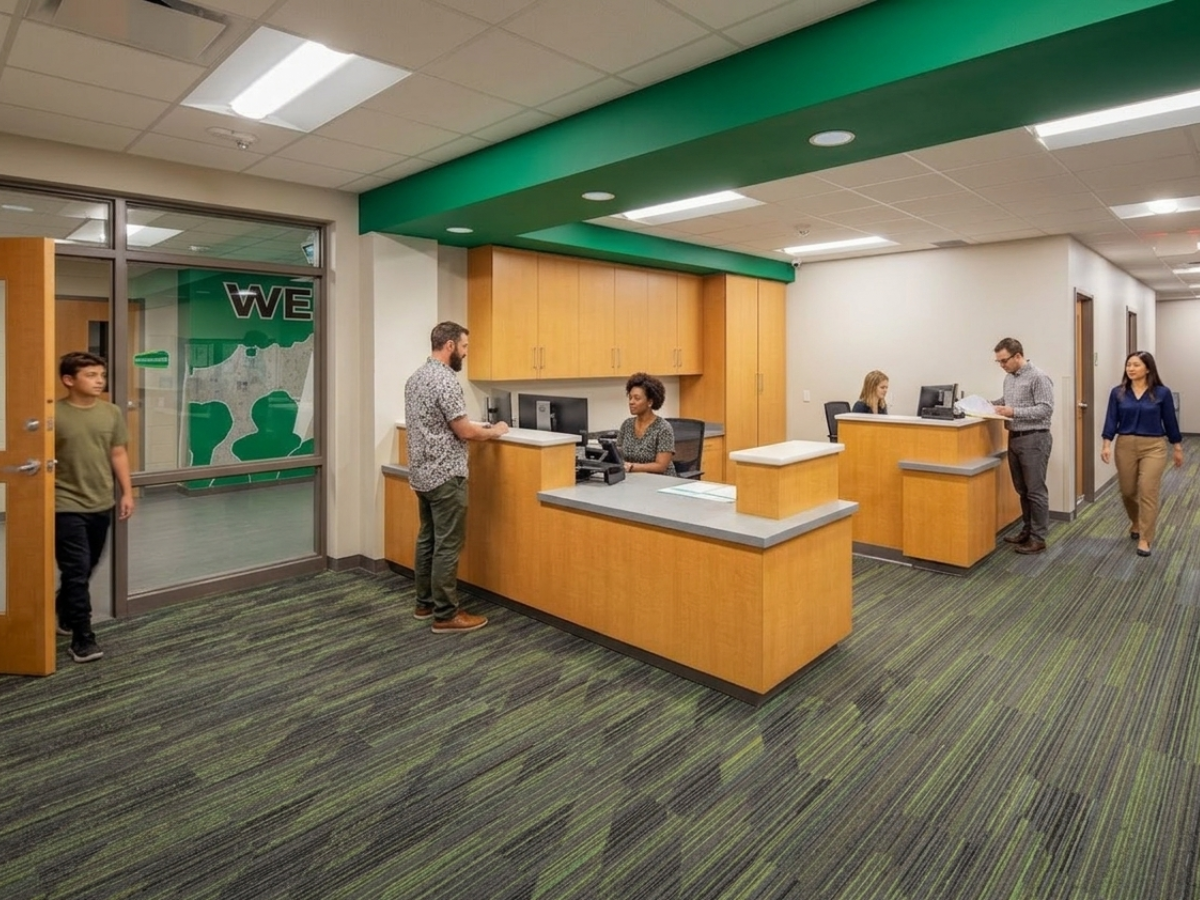
In Metro Atlanta, K‑12 charter and independent schools compete for families, faculty, community trust, and student engagement. Branding, culture, and campus experience matter more than ever — and color plays a bigger role than most school leaders realize. The paint colors used in hallways, classrooms, exterior façades, athletic areas, and wayfinding elements influence not only aesthetics but also behavior, belonging, clarity, and even learning outcomes.
When done intentionally, color supports:
- Stronger school identity
- Improved student navigation
- A calmer, more focused classroom environment
- A consistent branded experience across buildings
- Better first impressions for prospective families
Below is how color influences school culture and operations — and how facilities teams in Metro Atlanta can make smarter, more strategic choices.
Color as a Branding Tool for Charter & Independent Schools
Branding is more than a logo. Families form impressions the moment they step on campus — from exterior colors to hallway palettes and classroom finishes. Color helps reinforce:
-
Mission & Values
A school with a focus on creativity might use vibrant accents; a STEM‑focused charter might prefer structured, muted tones.
-
School Identity & Recognition
Consistent use of school colors across:
- Entryways
- Exterior facades
- Gym walls
- Administrative offices
It creates instant recognizability.
-
Community Pride
Colors that align with the school’s brand help cultivate:
- Student belonging
- Parent affinity
- Alumni loyalty
- Stronger campus cohesion
In competitive Metro Atlanta districts, this consistency strengthens recruitment and retention.
Color’s Role in School Culture
Color impacts how students feel, behave, and interact with their environment.
Warm Neutrals & Soft Tones
Help spaces feel calm and inviting — ideal for:
- Counseling areas
- Elementary classrooms
- Media centers
Blues & Blue‑Greens
Research shows they improve focus and reduce anxiety — a great fit for:
- Middle school classrooms
- Testing environments
- Academic wings
School Spirit Colors
Used strategically (not overwhelmingly) in shared spaces like:
- Gyms
- Cafeterias
- Hallways
- Theaters
…support energy and culture without creating visual chaos.
Allowing color to complement, not dominate, the environment is key. Your school’s culture should feel intentional — never accidental.
Color as a Wayfinding System
Large charter and private schools in Metro Atlanta often struggle with campus navigation. Color becomes a helpful, low‑cost wayfinding tool.
Color Zoning
Assign colors to wings or grade levels:
- Blue = Lower School
- Green = Middle School
- Burgundy = Upper School
This reduces student confusion, improves visitor experience, and supports safety in emergency situations.
Hallway Accents & Door Frames
Use bold colors to identify:
- Key intersections
- Stairwells
- Grade transitions
- Specialized classrooms (science labs, arts, athletics)
Signage Integration
Pairing painted elements with signage improves visibility and clarity.
Thoughtful color coding supports self‑direction and reduces congestion in busy transitions.
Exterior Colors & Community Perception
- Exterior paint is a school’s handshake — especially in Metro Atlanta neighborhoods where families are evaluating multiple options.
Neutral bases with branded accents
- Provide a professional, long‑lasting look while allowing school identity to shine through.
Avoid overly saturated exterior colors
- Atlanta’s UV-heavy climate can cause rapid fading, uneven wear, and a dated look within 1–2 years.
Highlight architectural features
- Entrances, columns, trim, and campus landmarks should support branding while staying elegant.
Appropriate, timeless color choices create positive impressions for prospective families and visiting partners.
How Regulations Influence Color Choices
Color decisions cannot be made in a vacuum. Many Metro Atlanta schools — charter and private — operate within regulated spaces, either through:
- Local building codes
- Landlord requirements
- Municipal color limitations for historic areas
- Fire safety guidelines
- Indoor air quality standards
Before finalizing a palette, review Elaboración de normas locales para la renovación y actualización escolar for insights into compliance factors that impact both color and coating selection.
Best Practices for Choosing Colors Strategically
-
Create a School‑Wide Color Standard Guide
This ensures consistency across:
- New buildings
- Renovations
- Summer repaints
- Classroom updates
-
Use High‑Durability, Educational‑Grade Coatings
- These reduce touch‑ups and maintain color integrity over time.
-
Test Colors in Real Lighting
- Lighting differs dramatically between classrooms, hallways, and exteriors.
-
Involve Staff & Leadership
- Teachers, principals, and facilities teams provide useful perspective.
-
Plan Color Around Annual Maintenance Cycles
- Summer is ideal for large updates; winter break works for small projects.
Final Thoughts
Color plays a powerful role in student experience, school identity, and daily operations. Whether refreshing an older campus or establishing a brand for a growing charter or independent school, choosing the right colors is one of the most impactful — and cost‑effective — decisions school leaders can make.
As proud members of the Georgia Charter Schools Association (GCSA) and corporate sponsors of the Georgia Independent School Association (GISA), we understand exactly what K‑12 leaders need for their painting projects.
If your Metro Atlanta school is planning a repaint or exploring updated color standards, check what we prepared for you: Ultimate Guide to Painting K‑12 Charter & Independent Schools in Atlanta.
Ready to move forward? Let’s talk about your upcoming project!