
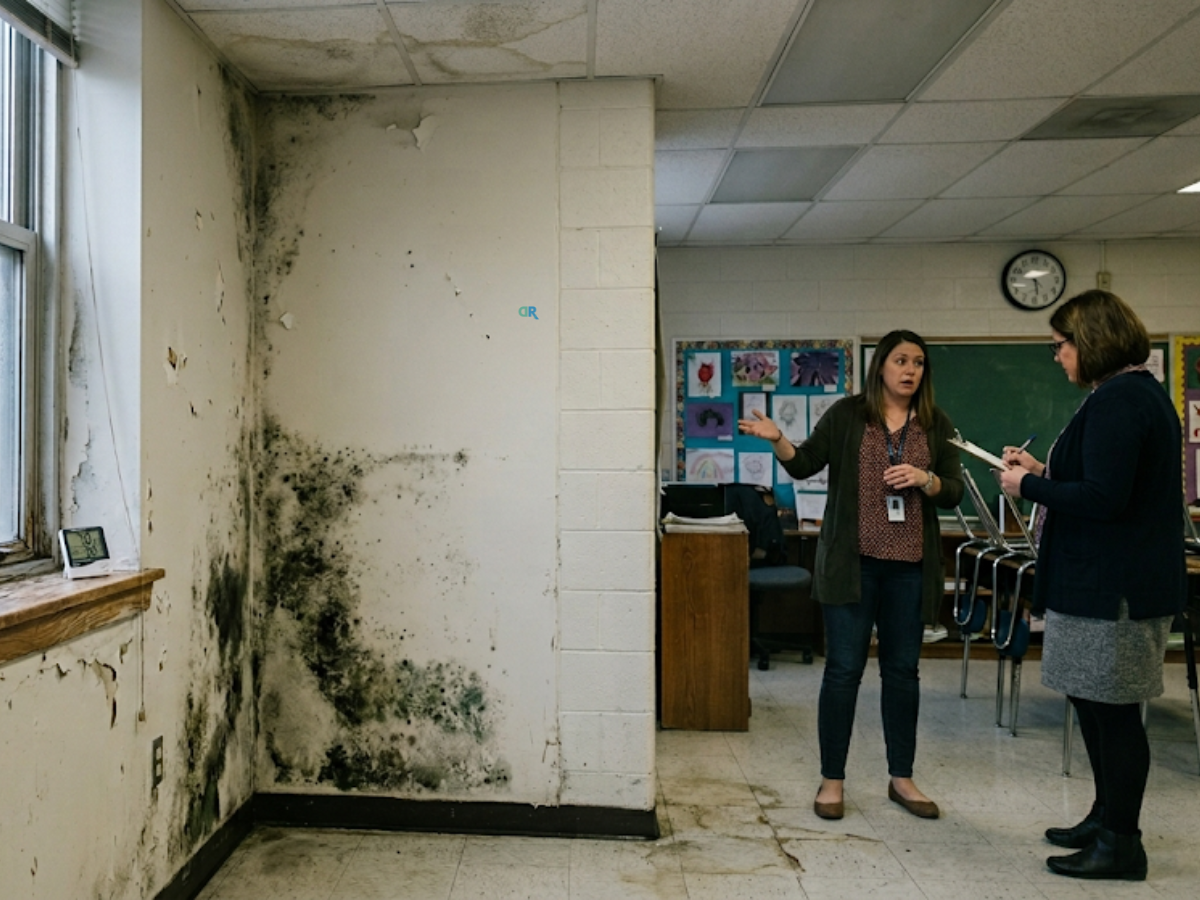
School leaders across Metro Atlanta face constant pressure to keep facilities safe, healthy, and fully operational—all while navigating tight budgets, aging buildings, and packed academic calendars. Mold growth is one issue that can quickly escalate from a minor maintenance concern into a health, indoor air quality, and trust problem for students, staff, and families.
When mold appears, facilities teams often ask a critical question:
“Can we simply clean this, or do we need to repaint?”
As a school painting contractor in Atlanta, this is one of the most common—and most important—questions we hear from K–12 charter and independent schools. The answer matters because choosing the wrong approach can lead to recurring mold, wasted maintenance dollars, and avoidable disruptions during the school year.
In this article, we’ll explain:
- Why mold is so common in Atlanta schools
- When cleaning alone is sufficient—and when it isn’t
- How repainting with the right coating system helps prevent mold from returning
- How to evaluate mold issues area by area across a campus
- What to look for in a school painting contractor Atlanta schools can rely on
Important: Extensive mold growth may require professional remediation. Painting is a key part of prevention and long-term control, but it does not replace remediation when active mold is present.
Why Mold Is a Recurring Issue in Atlanta Schools
Atlanta’s climate creates ideal conditions for mold to thrive. High humidity, warm temperatures, and frequent rain all contribute to moisture buildup—especially in older school buildings.
As a result, mold commonly appears in:
- Restrooms and locker rooms with limited ventilation
- Classrooms along exterior walls where condensation forms
- Cafeterias and kitchens exposed to steam and heat
- Basements, mechanical rooms, and storage areas
- Portable classrooms with inconsistent HVAC control
Because we are proud members of the Georgia Charter Schools Association (GCSA) and corporate sponsors of the Georgia Independent School Association (GISA), we work closely with school leaders throughout the Atlanta area. As a result, we consistently see the same pattern:
Mold is rarely just a cleaning problem—it’s a moisture, materials, and maintenance strategy issue.
That distinction is critical when deciding whether cleaning or repainting is the right next step.
Cleaning Mold in Schools: When It Works—and When It Doesn’t
Cleaning can be effective, particularly when mold is identified early. However, it’s not always a long-term solution.
When Cleaning May Be Enough
In many cases, cleaning is appropriate when:
- Mold is small, isolated, and surface-level
- The source of moisture has already been resolved
- Paint is fully intact, with no peeling or bubbling
- The issue has not occurred repeatedly in the same area
Under these conditions, trained maintenance or custodial staff may successfully clean mold from:
- Painted drywall in good condition
- Metal frames and trim
- Tile and other non-porous surfaces
That said, cleaning alone has clear limitations.
When Cleaning Falls Short
Cleaning is not sufficient when:
- Mold stains return repeatedly
- Paint is peeling, cracking, or blistering
- Water stains or discoloration are visible
- Surfaces remain damp or humid
- Mold affects porous or compromised materials
In these situations, cleaning only addresses what you can see. Meanwhile, spores may remain trapped behind damaged paint films, allowing mold to reappear—often more aggressively.
At that point, repainting becomes a necessary part of a long-term solution.
When Repainting Is the Better Mold-Control Strategy
Repainting is about more than appearance. When done correctly, it restores the protective barrier that helps limit moisture intrusion and mold growth.
Clear Signs It’s Time to Repaint
Schools should strongly consider repainting when they notice:
- Peeling or blistering paint, which often signals trapped moisture
- Recurring mold in the same locations, even after cleaning
- Water stains or discoloration along ceilings or exterior walls
- Chalky, aging coatings that no longer seal surfaces
- Indoor air quality concerns raised by staff or parents
An experienced school painting contractor in Atlanta evaluates these signs within the broader context of building age, HVAC performance, room function, and previous coating systems.
How the Right Coatings Help Prevent Mold
A mold-conscious repainting project typically includes:
- Thorough surface preparation and proper drying
- Moisture-tolerant, stain-blocking primers
- Mold- and mildew-resistant topcoats
- Sheen and color selections that improve cleanability and visibility
While repainting doesn’t eliminate mold on its own, it plays a critical role in preventing recurrence when paired with moisture control and routine inspections.
Cleaning vs. Repainting: How to Decide by Area
Classrooms and Offices
In many cases, cleaning is sufficient for minor issues. However, repainting becomes necessary when mold repeatedly appears near windows, exterior walls, or aging surfaces.
Restrooms and Locker Rooms
Because humidity is constant, these areas often benefit from mold-resistant coatings and scheduled repainting rather than repeated cleaning alone.
Cafeterias and Kitchens
Steam, heat, and daily cleaning put extra stress on paint. As a result, repainting with durable, scrub-resistant coatings is often the safest long-term choice.
Corridors and Common Areas
When mold appears here, it may indicate larger moisture or ventilation issues. Once those are addressed, repainting helps restore surface protection.
Portable Classrooms
Due to temperature swings and limited HVAC control, portable classrooms often require proactive repainting with moisture-tolerant products.
What to Look for in a School Painting Contractor in Atlanta
Not every contractor understands the unique demands of K–12 environments. When evaluating a school painting contractor Atlanta schools should prioritize:
- Proven experience with charter and independent schools
- Knowledge of mold, moisture, and coating systems
- Safe scheduling around academic calendars
- Low- or zero-VOC product options
- Active involvement with organizations like GCSA and GISA
How a Specialized School Painting Partner Approaches Mold Prevention
A professional, school-focused approach includes:
- Campus walkthrough and risk assessment
- Area-by-area recommendations
- Coordination with maintenance or remediation teams
- Product selection tailored to school environments
- Execution with minimal disruption
- Post-project maintenance guidance
This process helps schools move from reactive fixes to planned, preventive maintenance.
Learn More: Your Complete K–12 Painting Resource
For a deeper look at planning and executing painting projects in Atlanta schools, explore our pillar resource: Ultimate Guide to Painting K‑12 Charter & Independent Schools in Atlanta
This guide covers:
- Safety and compliance in active school environments
- Long-term maintenance planning
- Coating systems that support durability and indoor air quality
- Scheduling strategies that minimize disruption
Not sure whether cleaning or repainting is the right step for your school?
A professional walkthrough can help you prioritize problem areas and develop a mold-conscious painting plan that protects students, staff, and facilities long term. Contact us!
A professional walkthrough can help you prioritize problem areas and develop a mold-conscious painting plan that protects students, staff, and facilities long term. Contact us!